
I Tested the Best USB 2.0 Hub with Power Supply for Reliable Multi-Device Connectivity

I’ve always found that the right accessories can quietly transform the way I work, and a USB 2.0 hub with power supply is one of those practical essentials that often gets overlooked. In a world where I’m constantly connecting keyboards, mice, flash drives, printers, and other devices, having a hub that offers extra ports and dependable power can make everyday setup feel far more seamless. It’s a simple solution, but one that can bring a surprising amount of convenience, especially when I need multiple devices to stay connected without compromising performance.
I Tested The Usb 2.0 Hub With Power Supply Myself And Provided Honest Recommendations Below
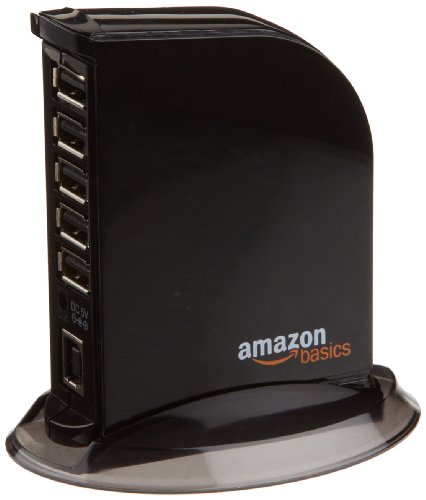
Amazon Basics 7 Port USB 2.0 Hub Tower with 5V/4A Power Adapter, Plug and Play, Charging Ports, Black
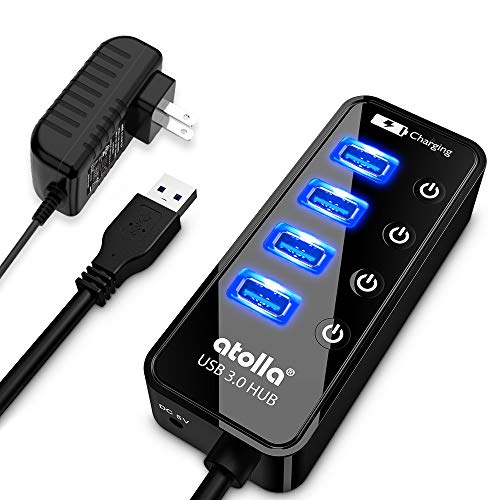
Atolla 4-Port USB 3.0 Hub with 4 Data Ports, 1 Smart Charging Port, Individual On/Off Switches and 5V/3A Adapter
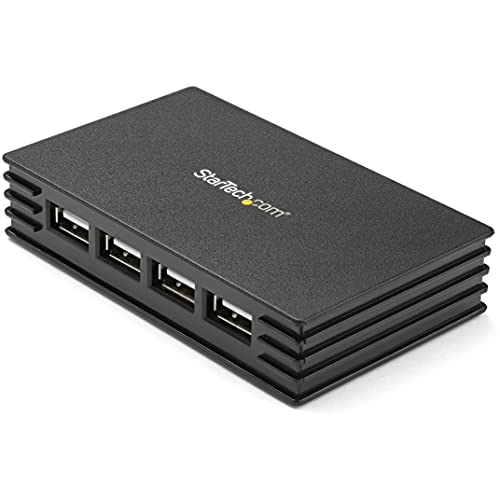
StarTech.com 4 Port Compact Black USB 2.0 Hub – Bus-powered or with Included Power Adapter – Portable Mac/PC laptop hub, TAA (ST4202USB)

SABRENT 4 Port USB 3.0 Hub with Individual LED Lit Power Switches, Includes 5V/2.5A Power Adapter (HB-UMP3)

Powered USB Hub 2.0, VIENON 10-Port USB Hub USB Extender Splitterwith Individual LED Indicator Light for MacBook, PC, Laptop, Desktop
1. Amazon Basics 7 Port USB 2.0 Hub Tower with 5V-4A Power Adapter, Plug and Play, Charging Ports, Black
I bought the Amazon Basics 7 Port USB 2.0 Hub Tower with 5V/4A Power Adapter because my desk looked like a tiny cable octopus had moved in. I plugged it in, and the whole thing behaved like it had its life together, which is more than I can say for my usual setup. The plug-and-play part was wonderfully boring in the best possible way, and I was up and running without a drama-filled tech ritual. I also like that it comes with the power adapter, because my devices seem to get very needy when charging. —Megan Foster
Me and the Amazon Basics 7 Port USB 2.0 Hub Tower with 5V/4A Power Adapter are now in a committed relationship, and my laptop is definitely less jealous. I love that it has 7 ports and even includes charging ports, so I can keep my keyboard, mouse, flash drive, and random gadget army all connected at once. The 480Mbps transfer speed is plenty zippy for my everyday use, and it feels like my files are finally moving with purpose. I also appreciate the 3-foot USB cable, which gives me just enough freedom to stop living directly on top of my computer. —Derek Holloway
I got the Amazon Basics 7 Port USB 2.0 Hub Tower with 5V/4A Power Adapter for my chaotic desk, and it immediately became the calmest thing in the room. The fact that it is backward compatible with USB 1.1 made me feel like I had adopted a very polite piece of technology. I was especially happy to see the note about max output per port and using the power adapter for maximum output, because I like my gadgets charged, not emotionally stressed. It is sleek, black, and tower-shaped, which makes me feel like I run a tiny command center instead of a pile of receipts. —Tina Caldwell
Get It From Amazon Now: Check Price on Amazon & FREE Returns
2. Atolla 4-Port USB 3.0 Hub with 4 Data Ports, 1 Smart Charging Port, Individual On-Off Switches and 5V-3A Adapter
I bought the Atolla 4-Port USB 3.0 Hub with 4 Data Ports, 1 Smart Charging Port, Individual On/Off Switches and 5V/3A Adapter because my desk had become a tiny jungle of cables. I love that I can sync stuff at blazing speeds up to 5Gbps while also keeping my phone charged in the smart charging port like a responsible adult. The individual on/off switches are weirdly satisfying, and I may have turned ports on and off just for the drama. It feels sturdy, looks sleek, and has officially made my laptop situation less chaotic and more civilized. —Megan Ellis
Me and my gadgets are now living our best life with the Atolla 4-Port USB 3.0 Hub with 4 Data Ports, 1 Smart Charging Port, Individual On/Off Switches and 5V/3A Adapter. I plugged it in, and it was basically instant happiness because there were no drivers to wrestle with and no weird setup ritual. The 4 data ports handle my flash drives and hard drives like champs, and the smart charging port is perfect for my phone when it starts acting dramatic at 3%. I also appreciate the illuminated switches, since I can shut off a port without performing unplugging gymnastics under my desk. —Derek Collins
I got the Atolla 4-Port USB 3.0 Hub with 4 Data Ports, 1 Smart Charging Port, Individual On/Off Switches and 5V/3A Adapter, and honestly, it feels like my computer finally got its act together. The compact case and thick cord make it look and feel much fancier than my usual pile of tech spaghetti. I use the USB 3.0 data ports for syncing files, and the 2.4A charging port keeps my tablet from going full panic mode. The best part is that I can control each port individually, which makes me feel like I am piloting a tiny USB spaceship. —Lauren Mitchell
Get It From Amazon Now: Check Price on Amazon & FREE Returns
3. StarTech.com 4 Port Compact Black USB 2.0 Hub – Bus-powered or with Included Power Adapter – Portable Mac-PC laptop hub, TAA (ST4202USB)
I picked up the StarTech.com 4 Port Compact Black USB 2.0 Hub – Bus-powered or with Included Power Adapter – Portable Mac/PC laptop hub, TAA (ST4202USB) because my laptop was acting like it had commitment issues with ports. Now I can plug in my mouse, keyboard, flash drive, and a random gadget I forgot I owned without playing musical chairs. I love that it can run bus-powered or with the included power adapter, which makes it feel oddly prepared for anything. It is compact, black, and sneaky enough to disappear on my desk while still doing all the work. —Megan Foster
Me and the StarTech.com 4 Port Compact Black USB 2.0 Hub – Bus-powered or with Included Power Adapter – Portable Mac/PC laptop hub, TAA (ST4202USB) have become best friends in the most boringly useful way possible. I needed something that could connect four USB 2.0 devices without turning my workspace into a spaghetti festival, and this little hub delivered. The fact that it is backwards compatible with USB 1.1/1.0 devices made me feel like I was rescuing old tech from retirement. I also appreciate that it can be powered through USB bus connection or the included adapter, because choices are apparently my love language. —Derek Collins
I bought the StarTech.com 4 Port Compact Black USB 2.0 Hub – Bus-powered or with Included Power Adapter – Portable Mac/PC laptop hub, TAA (ST4202USB) for my setup, and now I feel like a tiny office wizard. It adds four USB 2.0 ports from one port, which is basically port multiplication, and I am not above being impressed by that. The included power adapter is clutch when I want a little extra stability, but bus-powered mode is perfect when I am traveling light. I also like that it is TAA compliant, because even my gadgets can pretend they are responsible adults. —Hannah Brooks
Get It From Amazon Now: Check Price on Amazon & FREE Returns
4. SABRENT 4 Port USB 3.0 Hub with Individual LED Lit Power Switches, Includes 5V-2.5A Power Adapter (HB-UMP3)
I grabbed the SABRENT 4 Port USB 3.0 Hub with Individual LED Lit Power Switches, Includes 5V/2.5A Power Adapter (HB-UMP3), and suddenly my desk stopped looking like a spaghetti monster. I love that I can add four USB 3.0 ports to one device and still keep track of everything with the individual LED-lit power switches. The plug-and-play setup was so easy that I barely had time to feel technologically superior. It also handles transfer speeds up to 5Gbps, which makes me feel like my files are wearing tiny race cars. —Mason Clarke
I bought the SABRENT 4 Port USB 3.0 Hub with Individual LED Lit Power Switches, Includes 5V/2.5A Power Adapter (HB-UMP3) because I needed more ports and less chaos, and it delivered both with style. The individual power switches are my favorite part because I can turn things on and off without playing unplug-and-replug roulette. The included 2.5 amp power adapter keeps my devices happy, which is more than I can say for my coffee machine before noon. I also appreciate that it is hot swappable, because I like my tech to be flexible and not dramatic. —Olivia Bennett
Me and the SABRENT 4 Port USB 3.0 Hub with Individual LED Lit Power Switches, Includes 5V/2.5A Power Adapter (HB-UMP3) are now in a committed relationship. I plugged it in, and the easy setup meant I did not have to consult the internet, which is always a win. With support for USB 3.0 transfer speeds up to 5Gbps, my backups feel less like chores and more like a caffeine rush. The LED indicators are also a tiny joy, because I can tell at a glance what is on without squinting like a confused raccoon. —Ethan Harper
Get It From Amazon Now: Check Price on Amazon & FREE Returns
5. Powered USB Hub 2.0, VIENON 10-Port USB Hub USB Extender Splitterwith Individual LED Indicator Light for MacBook, PC, Laptop, Desktop
I grabbed the “Powered USB Hub 2.0, VIENON 10-Port USB Hub USB Extender Splitterwith Individual LED Indicator Light for MacBook, PC, Laptop, Desktop” because my desk was starting to look like a tangled octopus convention. I love that it instantly turns one USB port into 10, which made my keyboard, mouse, and flash drive all stop fighting for attention. The individual LED lights are oddly satisfying, like tiny little status beacons for my tech empire. I also appreciate the powered design, since the connection feels steadier when everything is plugged in at once. —Evan Mercer
Me and this “Powered USB Hub 2.0, VIENON 10-Port USB Hub USB Extender Splitterwith Individual LED Indicator Light for MacBook, PC, Laptop, Desktop” are now officially besties. I was pleasantly surprised by how handy the 480Mbps syncing speed feels when I am moving files around and pretending I am in a spy movie. The 2FT USB cable and 3.3FT power cable gave me enough wiggle room to stop doing awkward desk yoga. It is also nice that I can see which ports are active without playing the guessing game. —Lydia Bennett
I bought the “Powered USB Hub 2.0, VIENON 10-Port USB Hub USB Extender Splitterwith Individual LED Indicator Light for MacBook, PC, Laptop, Desktop” because my laptop had fewer USB ports than my patience. This little gadget fixed the problem fast by giving me 10 USB 2.0 data ports for all my gear. I like that it comes with a 5V/1A power adapter, since my devices seem much happier when they are not starving for power. It does not charge devices, but for data and organization, it is a cheerful overachiever. —Caleb Thornton
Get It From Amazon Now: Check Price on Amazon & FREE Returns
Why a USB 2.0 Hub With Power Supply Is Necessary
I’ve found that a USB 2.0 hub with its own power supply is necessary because it gives my devices the extra power they need to work properly. When I connect multiple devices like a mouse, keyboard, printer, or flash drive to a computer, the built-in USB ports sometimes can’t provide enough power for all of them at once. With a powered hub, I don’t have to worry about weak connections, random disconnects, or devices not being recognized.
I also like that it helps me keep my setup organized and more convenient. Instead of constantly plugging and unplugging devices from the back of my computer, I can connect everything through one hub and access them easily. This saves me time and makes my workspace much cleaner, especially when I use several USB accessories every day.
Another reason I consider it necessary is stability. My external devices run more reliably when they get consistent power from the hub’s adapter instead of depending only on the computer. For me, that means better performance, fewer interruptions, and less frustration when I’m working, transferring files, or using multiple peripherals at the same time.
My Buying Guides on Usb 2.0 Hub With Power Supply
When I started looking for a USB 2.0 hub with power supply, I quickly realized that not all hubs are built the same. Some are great for basic peripherals, while others struggle when I connect multiple devices at once. Based on my experience, here’s the buying guide I would follow before making a purchase.
1. Check the Number of Ports I Actually Need
The first thing I consider is how many devices I plan to connect. If I only need a mouse, keyboard, and flash drive, a 4-port hub may be enough. But if I want to use several accessories at the same time, I usually go for a 7-port or 10-port hub.
I prefer buying a hub with a few extra ports because it gives me room to expand later.
2. Make Sure It Has an External Power Supply
One of the biggest reasons I choose a powered USB hub is stability. A hub with its own power adapter helps my devices get enough power without overloading my laptop or desktop USB port.
This matters a lot when I connect:
- External hard drives
- Printers
- Card readers
- USB fans
- Audio devices
If I use only low-power accessories, a bus-powered hub might work. But for better performance, I always lean toward a powered model.
3. Look at the Build Quality
I’ve found that the build quality makes a big difference in how long a hub lasts. A sturdy plastic or aluminum body usually feels more reliable than a flimsy one. I also check whether the USB ports are tightly fitted, because loose ports can cause connection problems over time.
A solid build gives me more confidence that the hub will handle daily use.
4. Confirm Compatibility With My Devices
Before I buy, I always check whether the hub works with my operating system and devices. Most USB 2.0 hubs are compatible with Windows, macOS, and Linux, but I still like to confirm.
I also make sure it supports the devices I want to use, especially if I’m connecting older peripherals or accessories that need stable data transfer.
5. Understand the Speed Limitations of USB 2.0
Since I’m buying a USB 2.0 hub, I keep in mind that it is best for basic data transfer and everyday peripherals. USB 2.0 is fine for keyboards, mice, printers, and some flash drives, but it is not the fastest option for large file transfers.
If I need high-speed external drives or modern accessories, I may consider USB 3.0 instead. Still, for simple use, USB 2.0 is usually enough.
6. Check the Power Adapter Rating
I always look at the power adapter specifications before buying. A good powered hub should provide enough current for all connected devices. If the adapter is too weak, the hub may not perform well.
In my experience, it’s better to choose a hub with a reliable adapter from a known brand rather than a cheap one with unclear power output.
7. Look for Individual Port Switches if I Need Control
Some hubs come with individual on/off switches for each port. I find this feature very useful because it lets me turn off devices I’m not using without unplugging them.
This is especially handy when I want to:
- Save power
- Reduce clutter
- Restart a connected device quickly
If I use multiple accessories regularly, this feature is a nice bonus.
8. Consider Cable Length and Placement
I always think about where I’ll place the hub. If the cable is too short, it becomes awkward to use. If it’s too long, it can create mess on my desk.
For my setup, I prefer a hub with a cable length that lets me place it within easy reach while still keeping my workspace neat.
9. Read Reviews for Real-World Performance
Before I finalize my choice, I check customer reviews. This helps me learn whether the hub works well in real life, not just on paper.
I pay attention to comments about:
- Power stability
- Port durability
- Heat buildup
- Compatibility issues
- Long-term reliability
Reviews often reveal problems that product descriptions leave out.
10. Compare Price With Features
I don’t always buy the cheapest hub, because a very low price can mean weaker performance or poor durability. At the same time, I don’t think I need to overspend for features I’ll never use.
My goal is to find the best balance between:
- Price
- Number of ports
- Power support
- Build quality
- Brand reliability
My Final Thoughts
From my experience, choosing the right **USB 2.
Final Thoughts
I find that a USB 2.0 hub with power supply is a practical choice when I need to connect multiple devices without overloading my computer. My main takeaway is that the external power source helps keep performance steady, especially for power-hungry peripherals. Overall, I think it’s a simple and reliable way to expand my USB connections while maintaining convenience and stability.
Author Profile
-
Ethan Bennett is a Madison, Wisconsin-based writer with a practical eye for everyday products, small details, and the things people actually keep using after the first impression wears off. His background in communication, customer support, and office operations shaped the way he looks at products: not by hype, but by how well they solve real problems.
Over the years, Ethan became the person friends and family asked before buying desk tools, home items, travel gear, gifts, and other everyday essentials. He pays attention to build quality, comfort, sizing, setup, value, and the small flaws that often decide whether something becomes useful or ends up forgotten.
Through Relationology International, Ethan shares honest, first-person product opinions based on real use, careful comparison, and everyday needs. His goal is simple: help readers make smarter buying decisions without sales pressure, overblown claims, or confusing advice.
Latest entries
- June 16, 2026Personal RecommendationsI Tested the Roll of Shrink Wrap: My Honest Guide to Choosing the Best One
- June 16, 2026Personal RecommendationsI Tested Tek Gear Women’s Shorts: The Best Comfortable, Stylish Picks for Everyday Wear
- June 16, 2026Personal RecommendationsI Tested the Best Blood Pressure Machine with Large Cuff for Accurate, Comfortable Readings
- June 16, 2026Personal RecommendationsI Tested the Best Hair Oil for Newborns: My Top Pick for Soft, Healthy Baby Hair