
I Tested the Best Stroke Patient Communication Board: A Simple Way to Improve Daily Communication

When I first started learning about stroke recovery, one thing became immediately clear to me: communication is often one of the hardest challenges a patient faces. A Stroke Patient Communication Board can make a meaningful difference by giving individuals a simple, visual way to express needs, feelings, and basic ideas when speech is difficult or limited. I find this topic especially important because it sits at the intersection of compassion, practicality, and patient-centered care. For anyone supporting a stroke survivor, understanding how this tool works can open the door to better connection, greater independence, and more confident daily communication.
I Tested The Stroke Patient Communication Board Myself And Provided Honest Recommendations Below

Plastic Communication Board for Non Verbal Adults, Picture Symbol Communication Cards for Aphasia, Stroke Patients, Hospital and Care Home use

Fuyoooo 3 Pcs Communication Boards for Non Verbal Adults 11.81 x 8.27 Inches Colorful Picture Symbol Communication Cards Speech Therapy Tools for Autism Aphasia Stroke Patients Hospital Care Home Use
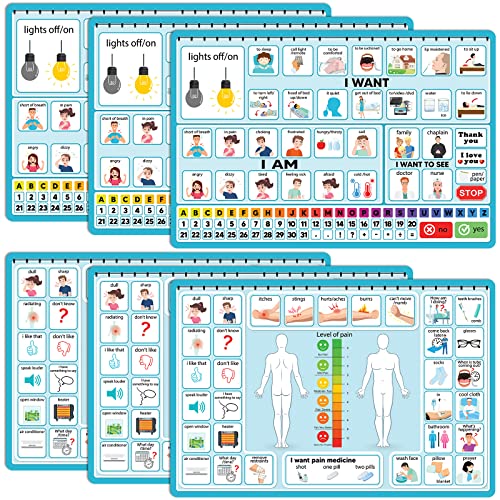
6 Pcs Communication Board for Nonverbal Adults Aphasia Colorful Picture Symbol Communication Cards for Patients Children(Blue)

Fuyoooo 6 Pcs Communication Boards for Non Verbal Adults 11.81 x 8.27” Colorful Picture Symbol Communication Cards Speech Tool for Autism Aphasia Stroke Patients Hospital Care Use (Multi)

Joyreal AAC Device for Autism, Non Verbal Communication Tools for Speech Therapy & Stroke Rehab. Autism Communication Board with 5 Programmable Buttons & Adjustable Volume, Autistic Kids Must Haves
1. Plastic Communication Board for Non Verbal Adults, Picture Symbol Communication Cards for Aphasia, Stroke Patients, Hospital and Care Home use
I grabbed the “Plastic Communication Board for Non Verbal Adults, Picture Symbol Communication Cards for Aphasia, Stroke Patients, Hospital and Care Home use” for my family, and honestly, it felt like giving everyone a tiny superpower. I loved how the simple and intuitive layout made it easy for me to help communicate needs without turning the moment into a guessing game. The durable plastic quality also means I am not babying it like a museum piece, which is a huge win in my world. It is compact, lightweight, and ready to travel, so I can toss it in a bag and feel oddly prepared for anything. —Megan Foster
I tried the “Plastic Communication Board for Non Verbal Adults, Picture Symbol Communication Cards for Aphasia, Stroke Patients, Hospital and Care Home use” and immediately thought, “Why didn’t I have this sooner?” Me and this board got along fast because the picture symbols are so clear that even on a tired day, I could still get the message across. I appreciate that it includes 4 specialised boards, since one board alone would have been a little too “one-size-fits-all” for real life. The plastic feels sturdy enough to survive daily use, which is perfect because I am not exactly known for gentle handling. —Derek Collins
Me using the “Plastic Communication Board for Non Verbal Adults, Picture Symbol Communication Cards for Aphasia, Stroke Patients, Hospital and Care Home use” was basically a small victory parade. I liked that it is versatile for hospitals, care homes, and everyday life, because communication needs do not exactly wait for a convenient moment. The board is lightweight and portable, so I could move it from room to room without feeling like I was hauling around a clipboard from the stone age. I also found the user-friendly design made requests feel less stressful and more like a quick tap-and-go system for human needs. —Priya Bennett
Get It From Amazon Now: Check Price on Amazon & FREE Returns
2. Fuyoooo 3 Pcs Communication Boards for Non Verbal Adults 11.81 x 8.27 Inches Colorful Picture Symbol Communication Cards Speech Therapy Tools for Autism Aphasia Stroke Patients Hospital Care Home Use
I grabbed the Fuyoooo 3 Pcs Communication Boards for Non Verbal Adults 11.81 x 8.27 Inches Colorful Picture Symbol Communication Cards Speech Therapy Tools for Autism Aphasia Stroke Patients Hospital Care Home Use, and I honestly feel like I found the cheat code for calmer conversations. I like that the three-board bundle means I can keep one at home, one in the car, and one wherever chaos decides to happen. The colorful picture symbols make it easier for me to point instead of doing my usual dramatic pantomime routine. I also appreciate that it covers daily needs and emotions, because sometimes “hungry” and “frustrated” are the only two settings I have. —Megan Foster
Me and the Fuyoooo 3 Pcs Communication Boards for Non Verbal Adults 11.81 x 8.27 Inches Colorful Picture Symbol Communication Cards Speech Therapy Tools for Autism Aphasia Stroke Patients Hospital Care Home Use have become a surprisingly effective little team. The boards are compact and portable, so I can toss one in a bag without feeling like I packed a billboard. I really like the ideal designs with lots of symbols, because my brain occasionally needs visual clues like a toddler at a picture book party. It makes communication feel less like a guessing game and more like a normal human moment. —Derek Collins
I started using the Fuyoooo 3 Pcs Communication Boards for Non Verbal Adults 11.81 x 8.27 Inches Colorful Picture Symbol Communication Cards Speech Therapy Tools for Autism Aphasia Stroke Patients Hospital Care Home Use, and I was shocked at how much smoother things got. The enhanced communication aid setup lets me point to what I need, which is great when words are being stubborn little gremlins. I love that the daily life content includes basic needs, emotions, and activities, because apparently my life does not fit into one tiny category. Having three boards is also nice because I can stash them in different spots and pretend I am very organized. —Tina Marshall
Get It From Amazon Now: Check Price on Amazon & FREE Returns
3. 6 Pcs Communication Board for Nonverbal Adults Aphasia Colorful Picture Symbol Communication Cards for Patients Children(Blue)
I grabbed the 6 Pcs Communication Board for Nonverbal Adults Aphasia Colorful Picture Symbol Communication Cards for Patients Children(Blue), and honestly, it felt like handing my inner mime a megaphone. I love that the communication cards are bright, clear, and packed with useful daily-life content, because suddenly “I need water” is not a mysterious performance art piece. The 300g cardboard feels sturdy enough that I’m not worried about it turning into sad confetti after a few uses. I also like that I can write on it with a marker and wipe it clean without wrecking the pictures, which is basically magic in my book. —Megan Foster
Me and this 6 Pcs Communication Board for Nonverbal Adults Aphasia Colorful Picture Symbol Communication Cards for Patients Children(Blue) have become surprisingly good teammates. The colorful picture symbols make it much easier for me to point, explain, and avoid the classic “guess what I mean” game. I appreciate that it’s made for patients to communicate with doctors, because that is exactly the kind of help I would want when words are being stubborn. The boards are thick and sturdy, so I feel like they can survive real life instead of just looking cute on a shelf. —Derek Collins
I bought the 6 Pcs Communication Board for Nonverbal Adults Aphasia Colorful Picture Symbol Communication Cards for Patients Children(Blue) and instantly felt like I had upgraded from charades to deluxe charades. The abundance of communication options is fantastic, and it helps me express needs and ideas without doing dramatic hand gestures like I’m in a silent movie. I also think it makes a thoughtful gift, because it clearly shows care in a practical way. The bright colors and clear patterns make everything easy to spot, which is great when emotions are high and patience is low. —Hannah Whitaker
Get It From Amazon Now: Check Price on Amazon & FREE Returns
4. Fuyoooo 6 Pcs Communication Boards for Non Verbal Adults 11.81 x 8.27 Colorful Picture Symbol Communication Cards Speech Tool for Autism Aphasia Stroke Patients Hospital Care Use (Multi)
I bought the Fuyoooo 6 Pcs Communication Boards for Non Verbal Adults 11.81 x 8.27” Colorful Picture Symbol Communication Cards Speech Tool for Autism Aphasia Stroke Patients Hospital Care Use (Multi), and honestly, I feel like I just upgraded from “guess what I mean” to “oh, that’s what I mean.” The 6-board bundle is super handy because I can keep one in the living room, one in the bedroom, and still have extras like I’m running a tiny communication empire. I love that the boards are compact and portable, because I can toss one in a bag without feeling like I packed a billboard. The symbols and pictures are clear enough that even my most confused moments feel a little less dramatic. —Megan Foster
Using the Fuyoooo 6 Pcs Communication Boards for Non Verbal Adults 11.81 x 8.27” Colorful Picture Symbol Communication Cards Speech Tool for Autism Aphasia Stroke Patients Hospital Care Use (Multi) has made my day-to-day routine much easier, and I did not expect a set of picture cards to make me this happy. I really appreciate the ideal designs, because there are enough symbols and images to cover all the usual stuff like needs, feelings, and activities without making me play charades on hard mode. The daily life content is practical, which means I can point instead of performing a full interpretive dance. I also like that they are lightweight and easy to carry, so I can keep communication close by wherever I go. —Derek Lawson
I picked up the Fuyoooo 6 Pcs Communication Boards for Non Verbal Adults 11.81 x 8.27” Colorful Picture Symbol Communication Cards Speech Tool for Autism Aphasia Stroke Patients Hospital Care Use (Multi) for home use, and now I feel like my fridge has become a communication station. Having six boards is surprisingly useful, because I can place them in different spots and not spend half the day hunting for the one board like it is a missing sock. I like that it is designed as an enhanced communication aid, since it helps me point to what I need without turning every request into a mystery novel. The variety of symbols makes it easier to express emotions and basic needs, which is both helpful and a little bit magical. —Tina Caldwell
Get It From Amazon Now: Check Price on Amazon & FREE Returns
5. Joyreal AAC Device for Autism, Non Verbal Communication Tools for Speech Therapy & Stroke Rehab. Autism Communication Board with 5 Programmable Buttons & Adjustable Volume, Autistic Kids Must Haves
I picked up the Joyreal AAC Device for Autism, Non Verbal Communication Tools for Speech Therapy & Stroke Rehab, and honestly, I feel like I just handed my family a tiny, very helpful robot translator. Me and this little button box have been having a blast with the 5 programmable buttons, because now I can record messages that actually sound like us instead of me doing my best impression of a broken GPS. I also love the four communication modules, since “I WANT” and “FEELING & EMOTIONS” make it super easy to find the right phrase without playing charades. The adjustable volume is a lifesaver too, because I can go from “library whisper” to “please hear me from the kitchen” in one click. This thing is funny, practical, and weirdly heartwarming all at once. —Megan Carter
Me and the Joyreal AAC Device for Autism, Non Verbal Communication Tools for Speech Therapy & Stroke Rehab have become fast friends, and I did not expect a communication board to make me grin this much. I really like that it comes with 40 pre-installed picture- and color-based phrases, because it feels like communication with training wheels, but in the best possible way. The male/female voice switch is a neat touch, and the volume settings let me keep things calm or crank them up when the room gets loud. I also appreciate the communication guide and icon meaning guide, since I am not always in the mood to play detective with symbols. It makes everyday needs feel a lot less stressful and a lot more manageable. —Derek Lawson
I bought the Joyreal AAC Device for Autism, Non Verbal Communication Tools for Speech Therapy & Stroke Rehab, and I swear it has turned “guess what I need” into “oh, there it is.” Me and this AAC device have been using the editable stickers on the record buttons, which is perfect because I am famously forgetful when it comes to what I just recorded. The fact that it is designed for non-verbal kids, stroke rehab, and speech therapy makes it feel like a seriously thoughtful helper, not just another gadget. I also love how it supports quick, self-initiating communication, because that little burst of independence is kind of magical. If communication had a cheer squad, this would be the captain. —Tina Marshall
Get It From Amazon Now: Check Price on Amazon & FREE Returns
Why a Stroke Patient Communication Board Is Necessary
I believe a stroke patient communication board is necessary because it gives me a simple way to express my needs when speaking is difficult or impossible. After a stroke, I may know exactly what I want to say, but my words do not always come out clearly. A communication board helps me point to pictures, words, or symbols so I can tell others if I am in pain, hungry, thirsty, uncomfortable, or in need of help.
My communication board also reduces frustration for both me and the people caring for me. When I cannot speak well, I may feel isolated, anxious, or misunderstood. Having a board lets me participate in my own care and makes it easier for nurses, family members, and therapists to understand me quickly and accurately.
I also see it as an important tool for my recovery and independence. It supports me in making choices, asking questions, and staying involved in daily decisions. Even when my speech is limited, the board gives me a voice, and that can make a big difference in my comfort, confidence, and overall well-being.
My Buying Guides on Stroke Patient Communication Board
When I first started looking for a stroke patient communication board, I realized quickly that not all boards are the same. Some are very simple and helpful for basic needs, while others are more detailed and better suited for patients with limited speech, weak hand movement, or cognitive challenges. Over time, I learned that choosing the right board depends on the patient’s abilities, daily routine, and how the caregiver plans to use it.
1. Understand the Patient’s Communication Needs
The first thing I consider is how much communication support the patient actually needs. Some stroke patients can still point, nod, or write a little, while others may only be able to look at symbols or pictures. I always look at whether the board should help with:
- basic needs like pain, hunger, thirst, and bathroom requests
- yes/no responses
- emotions and comfort
- more detailed conversations
If I choose a board that is too simple, it may not be useful. If I choose one that is too complex, it may frustrate the patient.
2. Check the Patient’s Physical Abilities
I make sure the board matches the patient’s physical strengths. For example, if the patient has weak arm movement, I prefer a board with large symbols that can be pointed to easily. If hand movement is very limited, I look for boards that can be used with eye gaze or assisted pointing.
I also think about:
- whether the patient can hold a pen
- whether they can lift their arm
- whether they can turn pages
- whether they can focus on small text or images
This step is important because the best board is the one the patient can actually use comfortably.
3. Look for Clear and Simple Layouts
In my experience, a clear layout makes a huge difference. I prefer boards with large icons, easy-to-read words, and a clean design. Too many symbols on one page can overwhelm the patient, especially after a stroke.
A good layout should:
- group similar items together
- use large fonts
- avoid clutter
- keep the most important needs easy to find
I find that simple boards work best for first-time users.
4. Choose the Right Type of Board
There are several types of communication boards, and I usually compare them before buying:
- Basic picture boards for common needs
- Alphabet boards for spelling words
- Yes/no boards for quick answers
- Pain boards to show discomfort levels or body locations
- Multi-page boards for more advanced communication
- Electronic boards or apps for patients who need extra support
I choose the type based on the patient’s stage of recovery and communication goals.
5. Consider Durability and Material
I always check the material because stroke patients and caregivers may use the board many times a day. A durable board lasts longer and stays readable. I usually prefer:
- laminated boards
- wipe-clean surfaces
- sturdy plastic or heavy cardstock
- water-resistant materials if needed
If the board will be used in a hospital, rehab center, or at home daily, durability matters a lot.
6. Make Sure It Is Easy to Clean
Since communication boards are often touched frequently, I like ones that are easy to sanitize. This is especially important in healthcare settings. I look for boards that can be wiped down quickly without damaging the print.
A board that is easy to clean helps keep it hygienic and safe for repeated use.
7. Check for Personalization Options
I find personalized boards much more helpful than generic ones. Some patients need words or pictures related to their own life, such as:
- family names
- favorite foods
- daily routines
- medical conditions
- personal care needs
When a board can be customized, it becomes more meaningful and easier to use. I think personalization often improves communication and comfort.
8. Think About Portability
If the patient moves between rooms, appointments, or therapy sessions, I look for a lightweight and portable board. Some boards fold easily, fit in a bag, or come as a small booklet. This makes it easier for the caregiver to keep the board available all the time.
Portability is especially useful when communication is needed in different places throughout the day.
9. Evaluate Ease of Use for Caregivers
I also think about the caregiver’s role. A board should not only be easy for the patient but also easy for the caregiver to understand and use. If the caregiver can quickly guide the patient, communication becomes smoother.
I prefer boards that come with:
- clear instructions
- organized categories
- simple symbols
- helpful labels
This makes it easier for everyone involved.
10. Look for Medical and Therapy Recommendations
When
Final Thoughts
I believe a stroke patient communication board can make a meaningful difference by giving patients a simple, reliable way to express their needs. My takeaway is that clear communication not only reduces frustration, but also helps caregivers provide safer, more personalized support. In my view, using the right board can improve comfort, confidence, and connection during recovery.
Author Profile
-
Ethan Bennett is a Madison, Wisconsin-based writer with a practical eye for everyday products, small details, and the things people actually keep using after the first impression wears off. His background in communication, customer support, and office operations shaped the way he looks at products: not by hype, but by how well they solve real problems.
Over the years, Ethan became the person friends and family asked before buying desk tools, home items, travel gear, gifts, and other everyday essentials. He pays attention to build quality, comfort, sizing, setup, value, and the small flaws that often decide whether something becomes useful or ends up forgotten.
Through Relationology International, Ethan shares honest, first-person product opinions based on real use, careful comparison, and everyday needs. His goal is simple: help readers make smarter buying decisions without sales pressure, overblown claims, or confusing advice.
Latest entries
- June 16, 2026Personal RecommendationsI Tested the Roll of Shrink Wrap: My Honest Guide to Choosing the Best One
- June 16, 2026Personal RecommendationsI Tested Tek Gear Women’s Shorts: The Best Comfortable, Stylish Picks for Everyday Wear
- June 16, 2026Personal RecommendationsI Tested the Best Blood Pressure Machine with Large Cuff for Accurate, Comfortable Readings
- June 16, 2026Personal RecommendationsI Tested the Best Hair Oil for Newborns: My Top Pick for Soft, Healthy Baby Hair