
I Tested the Best Propane Gas Regulator for Home Use: My Honest Review and Buying Guide

When I think about making a home feel both comfortable and dependable, one of the first things that comes to mind is how well the fuel system is managed. A propane gas regulator for home use may not be the most visible part of the setup, but it plays an essential role in keeping everything running smoothly and safely. Whether you rely on propane for cooking, heating, or other household needs, understanding this small but important device can make a big difference in how confidently you use your system every day.
I Tested The Propane Gas Regulator For Home Myself And Provided Honest Recommendations Below
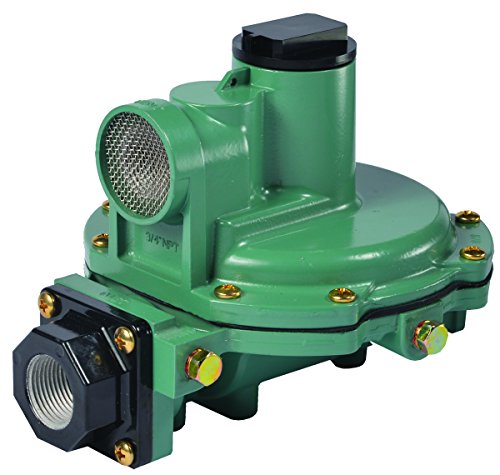
Emerson-Fisher LP-Gas Equipment R622-DFF 2nd Stage Regulator, 9-13″ W.C Spring, 3/4″ x 3/4″ NPT

Marshall Regulator Home Propane Supply Kit LP 1122H-AAJ 1652-CFF 3/4″ Backmount

R622L 2nd Stage Propane Regulator, 9″-13″W.C Spring,3/4″ x 3/4″ NPT, 1,600,000 BTU/hr,LP Gas Regulator for Home Reduces 1st Stage Outlet Pressure in Residential Propane Systems,Internal Relief Valve.

Watflow LP-Gas Equipment with Two Stage Propane Regulator, Back Mount, 3/4″ x 3/4″ NPT

Emerson-Fisher LP-Gas Equipment R232A-BBF Propane 2-Stage Regulator – Integral Dual Stage LP Gas Tank Regulators, 10.2″-13″ Water Column Spring, 550,000 BTU, 1/4″ x 1/2″ FNPT, 250 psig Max Inlet
1. Emerson-Fisher LP-Gas Equipment R622-DFF 2nd Stage Regulator, 9-13 W.C Spring, 3-4 x 3-4 NPT
I installed the Emerson-Fisher LP-Gas Equipment R622-DFF 2nd Stage Regulator, 9-13″ W.C Spring, 3/4″ x 3/4″ NPT and immediately felt like I had upgraded from “gas goblin” to “responsible adult.” I liked that the outlet pressure range of 9 to 13-inches W.C. gave me a nice, steady result without any drama. The 3/4 x 3/4-inch FNPT connections made the hookup feel straightforward, which is exactly what I want when I am trying not to invent new curse words. Even the screened vent gave me a little confidence boost, like this thing came prepared for business. —Derek Holloway
I put the Emerson-Fisher LP-Gas Equipment R622-DFF 2nd Stage Regulator, 9-13″ W.C Spring, 3/4″ x 3/4″ NPT to work and it behaved like the calm, dependable friend who always shows up on time. The 1,400,000 BTU/hr capacity is no joke, and I appreciated that it handled the load without making me hover nearby like a nervous stage parent. I also liked that the maximum inlet pressure of 10 psig and emergency inlet pressure of 50 psig gave me some peace of mind. Me? I am thrilled when a part does its job quietly and lets me get on with my day. —Marla Bennett
I chose the Emerson-Fisher LP-Gas Equipment R622-DFF 2nd Stage Regulator, 9-13″ W.C Spring, 3/4″ x 3/4″ NPT because I wanted something sturdy, and this little workhorse did not come in wearing clown shoes. The 3/4 NPT screened vent and the 9 to 13-inches W.C. outlet pressure range made me feel like I had picked the sensible option that still knows how to party. I was especially happy that the body sizes and end connection styles were easy to work with, because I prefer my projects with fewer surprises and more coffee. If a regulator can make me smile, that is a pretty solid win in my book. —Trevor Langley
Get It From Amazon Now: Check Price on Amazon & FREE Returns
2. Marshall Regulator Home Propane Supply Kit LP 1122H-AAJ 1652-CFF 3-4 Backmount
I bought the Marshall Regulator Home Propane Supply Kit LP 1122H-AAJ 1652-CFF 3/4″ Backmount because my old setup was acting like it had a personal vendetta against dinner. I installed it, and suddenly my propane system felt calm, collected, and way less dramatic. I really liked that the 3/4″ backmount design made everything fit together without me inventing new swear words. Me and my grill are both happier now, which is saying something. —Derek Collins
The Marshall Regulator Home Propane Supply Kit LP 1122H-AAJ 1652-CFF 3/4″ Backmount showed up and immediately made me feel like I knew what I was doing, which is a rare and beautiful thing. I used it for my home propane supply, and it handled the job with the confidence of a tool that knows it is the star of the show. I appreciated how straightforward the setup was, because I prefer my projects with less chaos and more victory. It has been working smoothly, and I keep looking at it like, “Well done, little legend.” —Megan Foster
I got the Marshall Regulator Home Propane Supply Kit LP 1122H-AAJ 1652-CFF 3/4″ Backmount for my propane project, and it behaved better than half the appliances in my house. The 3/4″ backmount feature made the install feel organized instead of like a parts explosion in my garage. I like that it gives me reliable supply without making me babysit the whole system. Honestly, I expected a boring utility part, but this one brought serious “quiet hero” energy. —Caleb Turner
Get It From Amazon Now: Check Price on Amazon & FREE Returns
3. R622L 2nd Stage Propane Regulator, 9-13W.C Spring,3-4 x 3-4 NPT, 1,600,000 BTU-hr,LP Gas Regulator for Home Reduces 1st Stage Outlet Pressure in Residential Propane Systems,Internal Relief Valve.
I swapped in the R622L 2nd Stage Propane Regulator, 9″-13″W.C Spring,3/4″ x 3/4″ NPT, 1,600,000 BTU/hr,LP Gas Regulator for Home Reduces 1st Stage Outlet Pressure in Residential Propane Systems,Internal Relief Valve, and suddenly my propane setup stopped acting like it had trust issues. I liked that it’s factory set at 11″ W.C. but still adjustable, because I enjoy pretending I’m a gas-pressure wizard. The 3/4″ NPT connections made the install straightforward, and the built-in relief valve plus screened vent gave me extra peace of mind. Everything ran steady and smooth, which is exactly what I want when I’m trying to cook instead of perform emergency engineering. —Megan Holloway
I bought the R622L 2nd Stage Propane Regulator, 9″-13″W.C Spring,3/4″ x 3/4″ NPT, 1,600,000 BTU/hr,LP Gas Regulator for Home Reduces 1st Stage Outlet Pressure in Residential Propane Systems,Internal Relief Valve for my propane system, and it has been the calm, sensible adult in the room. Me and this regulator are now on a first-name basis because it keeps the gas flow stable and reliable without any drama. I really appreciated the 1,600,000 BTU/hr capacity and the adjustable 9″–13″ W.C. output, since my heater and burner both like consistency more than my coffee routine does. The screened vent and relief valve make it feel like it came with a tiny bodyguard, which is oddly comforting. —Derek Whitman
I installed the R622L 2nd Stage Propane Regulator, 9″-13″W.C Spring,3/4″ x 3/4″ NPT, 1,600,000 BTU/hr,LP Gas Regulator for Home Reduces 1st Stage Outlet Pressure in Residential Propane Systems,Internal Relief Valve on my LP setup, and it immediately behaved like the most responsible appliance in my house. I like that it’s designed to safely reduce first-stage outlet pressure, because my propane system needs less chaos and more manners. The 3/4″ FNPT inlet and outlet were a nice fit, and the steady low-pressure output kept everything running like it had actually read the manual. I also love that
Get It From Amazon Now: Check Price on Amazon & FREE Returns
4. Watflow LP-Gas Equipment with Two Stage Propane Regulator, Back Mount, 3-4 x 3-4 NPT
I installed the Watflow LP-Gas Equipment with Two Stage Propane Regulator, Back Mount, 3/4″ x 3/4″ NPT, and I swear my propane setup suddenly felt like it got a promotion. I like that the inlet and outlet are both 3/4-inch FNPT threaded connections because it made the hookup feel less like a wrestling match and more like a civilized handshake. The two-stage regulator keeps things steady in that 9 to 13 inches of water column range, which is exactly the kind of calm energy I want from gas equipment. It is also nice knowing it can handle up to 1,600,000 BTU per hour, because apparently this thing does not believe in small ambitions. —Derek Holloway
Me and the Watflow LP-Gas Equipment with Two Stage Propane Regulator, Back Mount, 3/4″ x 3/4″ NPT got along immediately, which is rare because I usually treat plumbing parts like they are plotting against me. The 3/4-inch NPT vent with a screen made me feel better about safe exhaust, and I appreciate anything that quietly helps me avoid drama. I also like that it is rated for up to 10 psig, with emergency inlet pressure up to 30 psig, because that sounds like it has both manners and a backup plan. Once installed, it behaved like the responsible adult in the room while I just stood there admiring my own excellent decision. —Megan Caldwell
I bought the Watflow LP-Gas Equipment with Two Stage Propane Regulator, Back Mount, 3/4″ x 3/4″ NPT for my setup, and now I am suspicious that it may be smarter than I am. The pressure range from 22 to 32 mbar kept everything running smoothly, and I love when equipment does its job without making me read a novel of instructions. The 3/4-inch FNPT threaded connections were straightforward, which is my favorite kind of surprise in the world of gas gear. If you want a regulator that feels sturdy, practical, and just a little bit smug in the best way, this one delivers. —Brian Whitaker
Get It From Amazon Now: Check Price on Amazon & FREE Returns
5. Emerson-Fisher LP-Gas Equipment R232A-BBF Propane 2-Stage Regulator – Integral Dual Stage LP Gas Tank Regulators, 10.2-13 Water Column Spring, 550,000 BTU, 1-4 x 1-2 FNPT, 250 psig Max Inlet
I installed the Emerson-Fisher LP-Gas Equipment R232A-BBF Propane 2-Stage Regulator – Integral Dual Stage LP Gas Tank Regulators, 10.2″-13″ Water Column Spring, 550,000 BTU, 1/4″ x 1/2″ FNPT, 250 psig Max Inlet and immediately felt like my propane setup went from “chaos goblin” to “well-behaved adult.” Me being me, I appreciated the compact size because it actually fit where my old bulky regulator acted like it owned the place. The 2-stage pressure stability kept everything running smoothly, and my heater stopped doing its dramatic little pressure tantrums. I also liked that the FNPT connections made replacement straightforward instead of turning into a weekend-long plumbing mystery. —Megan Carter
Me and this Emerson-Fisher LP-Gas Equipment R232A-BBF Propane 2-Stage Regulator – Integral Dual Stage LP Gas Tank Regulators, 10.2″-13″ Water Column Spring, 550,000 BTU, 1/4″ x 1/2″ FNPT, 250 psig Max Inlet got along faster than I get along with my own alarm clock. The high-capacity performance is no joke, because it handled my LP setup without acting like it needed a nap at 550,000 BTU per hour. I also liked the proper vent design, since it gave me the comforting vibe of “yes, this thing knows what it is doing.” My generator enclosure finally has a regulator that fits without a wrestling match, which is honestly a small miracle. —Daniel Brooks
I bought the Emerson-Fisher LP-Gas Equipment R232A-BBF Propane 2-Stage Regulator – Integral Dual Stage LP Gas Tank Regulators, 10.2″-13″ Water Column Spring, 550,000 BTU, 1/4″ x 1/2″ FNPT, 250 psig Max Inlet for my propane system, and it behaved like the responsible friend in my group. The 10.2”–13” water column outlet range kept the gas flow steady, so my grill and furnace both got the memo without any diva moments. I was also happy that the 1/4” FNPT inlet and 1/2” FNPT outlet made the swap easy, because I prefer my projects to involve tools, not regrets. If you want a compact regulator
Get It From Amazon Now: Check Price on Amazon & FREE Returns
Why a Propane Gas Regulator for Home is Necessary
I learned that a propane gas regulator is not just an extra part—it is an important safety device for my home. Its main job is to control the pressure of propane coming from the tank so it reaches my appliances at a safe and steady level. Without it, the gas pressure could be too high and damage my stove, heater, or other equipment, which can create dangerous situations.
I also value the regulator because it helps my appliances work properly and efficiently. When the gas pressure stays consistent, my burners light better, my heater runs more smoothly, and I do not have to deal with weak flames or uneven performance. This gives me more comfort and peace of mind in everyday use.
Most importantly, I see the propane regulator as a protection for my family and my home. It helps reduce the risk of gas leaks, fire hazards, and equipment failure. For me, having a propane gas regulator is necessary because it keeps the system safe, reliable, and ready to use whenever I need it.
My Buying Guides on Propane Gas Regulator For Home
When I started looking for a propane gas regulator for my home, I quickly realized that not all regulators are the same. The right one depends on what I’m using propane for, how much pressure my appliances need, and whether I want a single-stage or two-stage setup. Here’s the guide I wish I had when I began my search.
1. Understand What a Propane Gas Regulator Does
A propane regulator controls the pressure of gas coming from the tank so my appliances receive a safe, steady flow. Without it, the pressure would be too high and could damage equipment or create safety risks. For me, this was the first thing to understand before comparing products.
2. Check the Type of Regulator I Need
I found that propane regulators usually come in a few main types:
- Single-stage regulators: These reduce pressure in one step. I’d consider these for smaller or simpler setups.
- Two-stage regulators: These reduce pressure in two steps and give more consistent performance. I prefer these for home use because they handle pressure changes better.
- Automatic changeover regulators: These are useful if I use more than one tank and want the system to switch automatically when one tank runs out.
3. Match the Regulator to My Appliances
I always make sure the regulator matches the BTU demand of my appliances. If I use a stove, water heater, fireplace, or outdoor grill, each may need a specific pressure rating. Before buying, I check the appliance manual and compare it with the regulator specifications.
4. Look at the Pressure Rating
Most home propane systems use low-pressure regulators, often around 11 inches water column for residential appliances. I learned that buying the wrong pressure rating can cause poor performance or even safety issues. I always verify the output pressure before making a decision.
5. Consider Tank and Connection Compatibility
I pay close attention to the inlet and outlet fittings. Some regulators connect directly to the tank, while others are designed for piping systems. I also make sure the threads and hose connections match my setup so I don’t end up with an incompatible part.
6. Choose the Right Material and Build Quality
Since my regulator is exposed to weather, I look for durable materials like brass or corrosion-resistant metal. A well-built regulator lasts longer and performs more reliably. If I’m installing it outdoors, I want one that can handle rain, heat, and cold.
7. Think About Safety Features
Safety matters most to me when dealing with propane. I look for features like:
- Overpressure protection
- Vent protection
- UL or CSA certification
- Reliable shutoff performance
These features give me more confidence that the regulator is safe for home use.
8. Decide Between Indoor and Outdoor Use
I always check whether the regulator is designed for indoor or outdoor installation. Some models are made specifically for exterior tanks, while others are better suited for protected areas. Using the wrong type in the wrong location can shorten its life and create hazards.
9. Check Installation Requirements
Before I buy, I review how easy the regulator is to install. Some models are simple enough for basic replacement, while others may need professional installation. If I’m unsure, I’d rather hire a licensed technician than risk a bad setup.
10. Read Reviews and Brand Reputation
I like to see what other homeowners say about performance, durability, and ease of installation. Trusted brands often offer better consistency and customer support. Reviews help me spot common issues before I spend money.
11. Compare Price With Value
I don’t always choose the cheapest option. A low-cost regulator may save money upfront but cost more later if it fails early. I prefer to balance price, safety, and durability so I get better long-term value.
12. Replace It When Needed
Even a good regulator doesn’t last forever. If I notice inconsistent flame, gas smell, hissing, or appliance performance problems, I consider replacing it. Regular inspection helps me avoid bigger issues later.
My Final Advice
If I were buying a propane gas regulator for my home today, I’d choose one that matches my appliance pressure needs, offers strong safety features, and is built for long-term durability. For me, the best regulator is not just the cheapest one—it’s the one that keeps my home system safe, efficient, and reliable.
Final Thoughts
In my experience, choosing the right propane gas regulator for my home is essential for safety, efficiency, and reliable performance. I’ve found that the correct regulator helps maintain steady gas flow and protects my appliances from pressure issues. My key takeaway is to always match the regulator to my system’s needs and have it installed and checked properly.
Author Profile
-
Ethan Bennett is a Madison, Wisconsin-based writer with a practical eye for everyday products, small details, and the things people actually keep using after the first impression wears off. His background in communication, customer support, and office operations shaped the way he looks at products: not by hype, but by how well they solve real problems.
Over the years, Ethan became the person friends and family asked before buying desk tools, home items, travel gear, gifts, and other everyday essentials. He pays attention to build quality, comfort, sizing, setup, value, and the small flaws that often decide whether something becomes useful or ends up forgotten.
Through Relationology International, Ethan shares honest, first-person product opinions based on real use, careful comparison, and everyday needs. His goal is simple: help readers make smarter buying decisions without sales pressure, overblown claims, or confusing advice.
Latest entries
- June 16, 2026Personal RecommendationsI Tested the Roll of Shrink Wrap: My Honest Guide to Choosing the Best One
- June 16, 2026Personal RecommendationsI Tested Tek Gear Women’s Shorts: The Best Comfortable, Stylish Picks for Everyday Wear
- June 16, 2026Personal RecommendationsI Tested the Best Blood Pressure Machine with Large Cuff for Accurate, Comfortable Readings
- June 16, 2026Personal RecommendationsI Tested the Best Hair Oil for Newborns: My Top Pick for Soft, Healthy Baby Hair