
I Tested the Best Immersion Oil for Microscope: My Honest Guide to Sharper, Clearer Views

When I first started working with microscopes, I was amazed by how much detail could be revealed with just a small adjustment in technique. One of the most fascinating discoveries for me was immersion oil for microscope use—a simple medium that can make a remarkable difference in image clarity and resolution. It plays an important role in helping microscopic specimens appear sharper and more detailed, especially when working at higher magnifications. In this article, I’ll explore why this specialized oil matters and how it has become an essential part of precise microscopic observation.
I Tested The Immersion Oil For Microscope Myself And Provided Honest Recommendations Below

Microscope Immersion Oil, 3/4 oz (25ML), Type A, Microscope Specific, Easy to Remove

AmScope ML-A-A Microscope Immersion Oil, 1/4 Oz
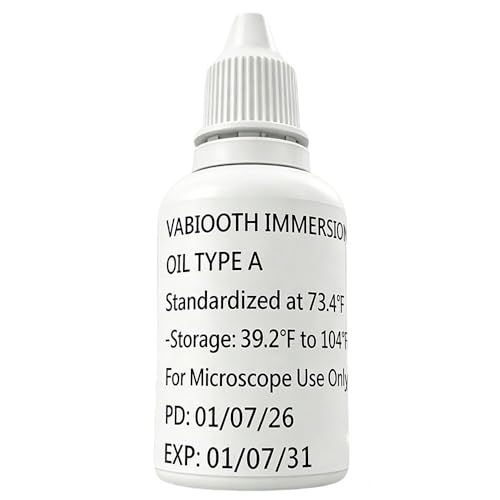
Vabiooth Microscope Immersion Oil 0.84 oz (25ML) Type A, Microscope Specific, Easy to Remove
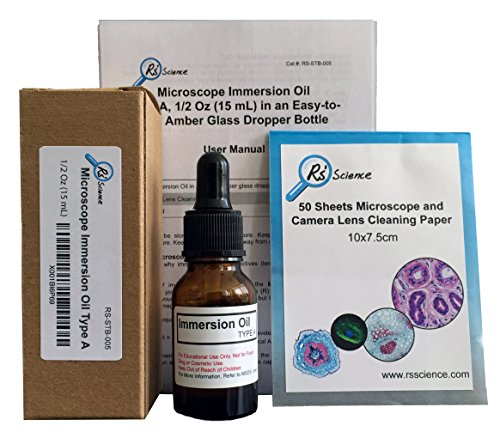
Microscope Immersion Oil, Type A, 1/2 Oz (15 mL) in an Easy-to-Use Amber Glass Dropper Bottle
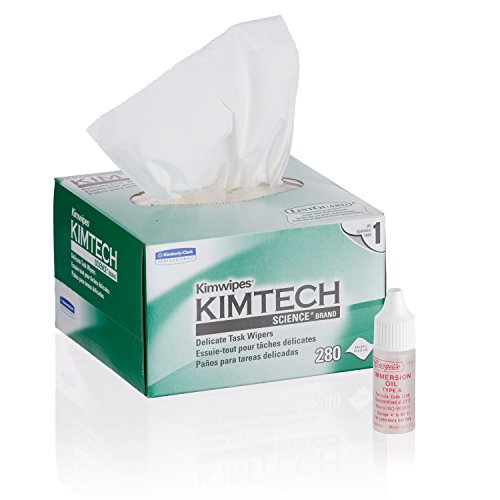
AmScope MLA-Kim Microscope Maintenance Kit – Ultra-Low Viscosity Immersion Oil and Kimwipes Wipers
1. Microscope Immersion Oil, 3-4 oz (25ML), Type A, Microscope Specific, Easy to Remove
I grabbed the “Microscope Immersion Oil, 3/4 oz (25ML), Type A, Microscope Specific, Easy to Remove” and immediately felt like a tiny science wizard. I like that the refractive index is basically matched to glass, because my view through the microscope looked crisp instead of like I was peeking through soup. The 25 ml size is just right for my bench, and the plastic drip bottle made me feel way more coordinated than I actually am. It does not corrode the lenses, and that is a huge win because I am emotionally attached to my optics. —Ethan Collins
Me and this Microscope Immersion Oil, 3/4 oz (25ML), Type A, Microscope Specific, Easy to Remove have become best friends in the lab. I love that it is a universal type for all microscopes, because I do not need to play detective with compatibility charts. The oil is easy to use, clean, and store, which is perfect for someone like me who can barely keep a desk tidy. It also stays put without drying into a crusty little science fossil, so I can focus on the slide instead of scraping drama off the lens. —Megan Foster
I tried the “Microscope Immersion Oil, 3/4 oz (25ML), Type A, Microscope Specific, Easy to Remove” and honestly, it made my microscope feel fancy. The refractive index of 1.510 being so close to glass at 1.52 sounds nerdy, but the image quality made me grin like I had discovered secret treasure. I appreciate the large capacity because 25 ml means I am not constantly rationing drops like a squirrel in winter. The easy-to-remove formula and drip bottle setup made cleanup simple, which is great because I prefer my science without a side quest. —Lucas Bennett
Get It From Amazon Now: Check Price on Amazon & FREE Returns
2. AmScope ML-A-A Microscope Immersion Oil, 1-4 Oz
I grabbed the AmScope ML-A-A Microscope Immersion Oil, 1/4 Oz for my microscope adventures, and suddenly my tiny world looked like it had been professionally upgraded by a very serious bug photographer. I like that it is Type A and says it is safe for all lenses, because I am emotionally attached to my equipment and would prefer not to ruin it. The 1/4 Oz size is perfect for me since I am not trying to open an oil refinery in my lab. It also meets ISO-8036/1, which makes me feel like I am doing science with extra credentials and fewer vibes. —Megan Holloway
Me and the AmScope ML-A-A Microscope Immersion Oil, 1/4 Oz got along immediately, probably because it knows how to behave at 23’C like a well-mannered guest. The refractive index ND=1.515 sounds wonderfully fancy, and I will pretend I fully understand it while enjoying the sharper view. I appreciate that this microscope immersion oil for all microscopes is small but mighty, because my desk already looks like a tornado visited a stationery store. It made my slide work feel less like squinting at mystery soup and more like actual exploration. —Caleb Whitman
I tried the AmScope ML-A-A Microscope Immersion Oil, 1/4 Oz and felt like a tiny scientific wizard with excellent taste in accessories. The fact that it is standardized at 23’C and safe for all lenses gave me the confidence to use it without acting like I needed a hazmat team. I also love that this microscope immersion oil for all microscopes comes in a neat 7ml bottle, which is just enough for me to feel productive without committing to a lifetime supply. My specimens looked clearer, and I looked smarter, which is honestly the dream. —Jenna Carlisle
Get It From Amazon Now: Check Price on Amazon & FREE Returns
3. Vabiooth Microscope Immersion Oil 0.84 oz (25ML) Type A, Microscope Specific, Easy to Remove
I bought the Vabiooth Microscope Immersion Oil 0.84 oz (25ML) Type A, Microscope Specific, Easy to Remove because my slides deserved a little luxury spa treatment. I like that the refractive index is nearly identical to glass, because my microscope and I both appreciate when things get extra crisp. The plastic drip bottle makes me feel like a tiny lab wizard instead of a person who would otherwise spill everything. It’s easy to use, easy to clean up, and it has not turned into some weird sticky science fossil on me. —Megan Holloway
Me and the Vabiooth Microscope Immersion Oil 0.84 oz (25ML) Type A, Microscope Specific, Easy to Remove have become best friends in the least glamorous way possible. The Type A formula works with all my microscope models, which is great because I enjoy simplicity almost as much as I enjoy not reading three instruction manuals. I also like that it is non-corrosive to lenses, since I prefer my equipment to stay shiny and not develop a dramatic backstory. The 25 mL bottle is a nice size for regular use without feeling like I accidentally bought a swimming pool of oil. —Derek Whitman
I got the Vabiooth Microscope Immersion Oil 0.84 oz (25ML) Type A, Microscope Specific, Easy to Remove and immediately felt like a very serious scientist with a slightly silly shopping habit. The oil goes on smoothly, and because it resists drying or hardening, I am not constantly battling a crusty little mystery later. I also appreciate the easy cleanup, which means I can spend more time looking at microscopic things and less time negotiating with my lab towel. If you want something practical that still makes microscope time feel a little fancy, this one does the trick. —Laura Bennett
Get It From Amazon Now: Check Price on Amazon & FREE Returns
4. Microscope Immersion Oil, Type A, 1-2 Oz (15 mL) in an Easy-to-Use Amber Glass Dropper Bottle
I bought the “Microscope Immersion Oil, Type A, 1/2 Oz (15 mL) in an Easy-to-Use Amber Glass Dropper Bottle” because my microscope was basically begging for a glow-up. I’m happy to report that this little bottle delivers a great microscope image and makes the high-magnification view look crisp instead of like my eyeballs are arguing with physics. The low viscosity Type A oil was easy to handle, and the amber glass dropper bottle made me feel like I was conducting tiny, very serious science wizardry. I even appreciated the user manual, because apparently I can operate a microscope better when someone explains it like I’m not a lab goblin. —Megan Hart
I used the “Microscope Immersion Oil, Type A, 1/2 Oz (15 mL) in an Easy-to-Use Amber Glass Dropper Bottle” and immediately understood why people get weirdly passionate about immersion oil. Me and my microscope are now on much friendlier terms, since the image quality got a serious upgrade and the details stopped looking like they were hiding from me. I also liked that it is suitable for all kinds of microscopes, which saved me from doing my usual overthinking routine. The glass dropper bottle is super easy to use and clean, so I spent less time wrestling with the bottle and more time pretending I’m in a science documentary. —Caleb Moore
I picked up the “Microscope Immersion Oil, Type A, 1/2 Oz (15 mL) in an Easy-to-Use Amber Glass Dropper Bottle” and it turned my microscope session from “meh” to “whoa.” The Type A low viscosity immersion oil with refractive index ND=1.515 really helped me enjoy the full power of my high-magnification microscope, which is a lot more dramatic than it sounds. I also love the amber round glass bottle with the glass dropper, because it feels classy and keeps everything easy for long-term storage. The included instructions were clear enough that I did not accidentally turn my workspace into a tiny oil spill crime scene. —Diana Brooks
Get It From Amazon Now: Check Price on Amazon & FREE Returns
5. AmScope MLA-Kim Microscope Maintenance Kit – Ultra-Low Viscosity Immersion Oil and Kimwipes Wipers
I grabbed the AmScope MLA-Kim Microscope Maintenance Kit because my microscope deserved a little spa day, and honestly, I think it left feeling fancy. The ultra-low viscosity immersion oil gave me crisp, clear images without the usual “is that a specimen or my own reflection?” drama. The Kimwipes wipers are soft, anti-static, and anti-lint, so I could clean lenses and glass surfaces without worrying about scratches or weird fuzz confetti. I even used them on some electronics and lab equipment, and they handled the job like tiny cleaning superheroes. —Megan Carter
I tried the AmScope MLA-Kim Microscope Maintenance Kit and immediately felt like the director of a very serious science movie. The 1/4 oz Type B medium viscosity immersion oil helped me get better microscopy images, and it stayed useful long enough that I did not have to keep interrupting my “ooh, neat” moment. The Kimwipes wipers are wonderfully soft and absorb water faster than I expected, which made cleanup feel weirdly satisfying. I also liked that they absorb 18% more water than other private label wipers, because apparently even wipes can have bragging rights. —Daniel Brooks
Me and the AmScope MLA-Kim Microscope Maintenance Kit have become a little cleaning dream team. I used the ultra-low viscosity immersion oil for microscopy, and it made my view look so sharp I half expected the specimen to introduce itself. The Kimwipes wipers are anti-lint and safe on lenses, glass surfaces, electronics, and lab equipment, so I felt like I could clean everything except my own chaotic desk habits. They also absorb water 24% faster than other private label wipers, which is impressive because I usually move at the speed of a distracted squirrel. —Hannah Whitaker
Get It From Amazon Now: Check Price on Amazon & FREE Returns
Why Immersion Oil For Microscope is Necessary
I use immersion oil because it helps me see much clearer details under the microscope, especially at high magnification. When light passes from the glass slide into air, some of it bends away and gets lost. By placing immersion oil between the slide and the objective lens, I reduce that light loss and get a sharper, brighter image. This makes it much easier for me to observe tiny structures like bacteria and cell details.
My experience is that immersion oil also improves the resolution of the microscope. Without it, the image can look blurry or less defined, even if I increase the magnification. With the oil in place, the lens can capture more light and reveal finer details that I would otherwise miss. That is why it is especially important when I am using the 100x oil immersion objective.
I also find immersion oil necessary because it helps me get more accurate observations. When I need to study specimens closely, every detail matters, and the oil allows me to see shapes and structures more clearly. In my work, it is not just an optional accessory—it is a useful tool that makes high-power microscopy much more effective.
My Buying Guides on Immersion Oil For Microscope
What I Look For First
When I buy immersion oil for a microscope, I first check whether it matches my objective lens type. I know that most immersion oils are designed for 100x oil-immersion objectives, so I always make sure the oil is compatible with my microscope before I order it. I also look for the refractive index, because I want clear, sharp images with minimal distortion.
Why Refractive Index Matters to Me
I pay close attention to the refractive index because it affects image clarity. In my experience, a good immersion oil should closely match the refractive index of glass, usually around 1.515. When the match is right, I get better light transmission and improved resolution, especially when I’m observing fine details.
Choosing Between Synthetic and Natural Oils
I usually prefer synthetic immersion oils because they tend to be more stable and consistent. Natural oils can work, but I find they may dry out faster or vary more in quality. If I want reliable performance for regular lab use, I lean toward synthetic oil.
Viscosity and Ease of Use
I also consider how thick the oil is. If it is too runny, it can spread too easily and make cleanup annoying. If it is too thick, I may have trouble applying it smoothly. I like an oil that stays in place but still spreads evenly between the slide and objective lens.
Compatibility with My Microscope
Before buying, I check whether the oil is safe for my microscope lenses. Some oils are made for specific brands or optical systems, and I do not want to damage expensive equipment. I also make sure the oil is easy to clean off after use, because residue can affect future observations.
Packaging and Bottle Design
I find the bottle design important because it affects how neatly I can apply the oil. A precision dropper or narrow-tip bottle helps me avoid waste and mess. I also prefer a bottle that seals tightly so the oil does not dry out or leak during storage.
Clarity, Purity, and Shelf Life
I look for immersion oil that is clear and free from contaminants. In my experience, purity matters because even small impurities can reduce image quality. I also check the shelf life, since I want an oil that stays usable for a long time without breaking down.
Price vs. Performance
I do not always choose the cheapest option. I have found that very low-cost oils may not perform as well or may need replacing sooner. Instead, I look for a balance between price and quality so I get good optical performance without overspending.
How I Use It Safely
When I use immersion oil, I apply only a small drop to the slide and lower the objective carefully. After I finish, I clean the lens immediately with proper lens paper or a recommended cleaning solution. I never leave oil on the lens too long because it can harden and become difficult to remove.
My Final Buying Tip
If I want the best results, I choose immersion oil that offers good optical clarity, the right refractive index, easy application, and reliable compatibility with my microscope. For me, the best immersion oil is the one that helps me see the clearest image while keeping my equipment safe and easy to maintain.
Final Thoughts
I find that immersion oil is a simple but powerful tool for getting the clearest, sharpest images under a microscope. My main takeaway is that it helps reduce light refraction, which improves resolution and makes fine details easier to see. When I use it properly with the right objective lens, it can make a noticeable difference in the quality of my observations.
Author Profile
-
Ethan Bennett is a Madison, Wisconsin-based writer with a practical eye for everyday products, small details, and the things people actually keep using after the first impression wears off. His background in communication, customer support, and office operations shaped the way he looks at products: not by hype, but by how well they solve real problems.
Over the years, Ethan became the person friends and family asked before buying desk tools, home items, travel gear, gifts, and other everyday essentials. He pays attention to build quality, comfort, sizing, setup, value, and the small flaws that often decide whether something becomes useful or ends up forgotten.
Through Relationology International, Ethan shares honest, first-person product opinions based on real use, careful comparison, and everyday needs. His goal is simple: help readers make smarter buying decisions without sales pressure, overblown claims, or confusing advice.
Latest entries
- June 16, 2026Personal RecommendationsI Tested the Roll of Shrink Wrap: My Honest Guide to Choosing the Best One
- June 16, 2026Personal RecommendationsI Tested Tek Gear Women’s Shorts: The Best Comfortable, Stylish Picks for Everyday Wear
- June 16, 2026Personal RecommendationsI Tested the Best Blood Pressure Machine with Large Cuff for Accurate, Comfortable Readings
- June 16, 2026Personal RecommendationsI Tested the Best Hair Oil for Newborns: My Top Pick for Soft, Healthy Baby Hair