
I Tested HDMI SDI 4K Encoders for HDMI: The Best High-Quality Streaming Solution

When I first started exploring professional video workflows, I quickly realized how important it is to bridge the gap between different signal formats without sacrificing quality. That’s exactly where HDMI SDI 4K encoders come into focus. These devices play a crucial role in transforming and transmitting high-resolution video across modern production, streaming, and broadcast environments, making it easier to move content from HDMI sources into SDI-based systems while preserving the clarity and reliability that 4K demands. As video technology continues to evolve, understanding how HDMI SDI 4K encoders fit into the bigger picture has become essential for anyone looking to deliver sharp, dependable, and future-ready video.
I Tested The Hdmi Sdi 4k Encoders Hdmi Myself And Provided Honest Recommendations Below
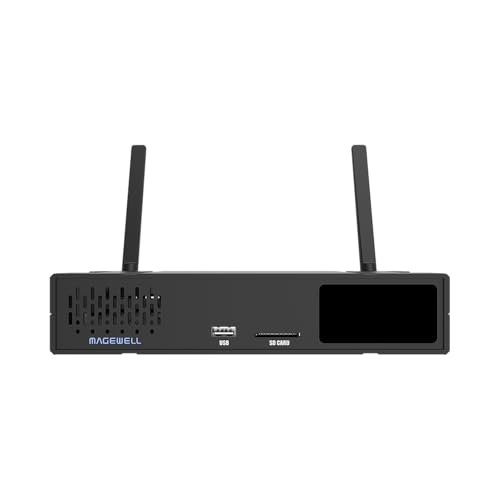
Magewell Ultra Encode AIO – HDMI/SDI 4K Encoder with Multi-Protocol Streaming, Recording, NDI|HX3 & Dual-Input Mixing for Live Production (53130)

Blackmagic Design Micro Converter HDMI to SDI 12G

SDI to HDMI Converter with SDI Loop Out, 1080p HD-SDI / 3G-SDI/SD-SDI to HDMI Video Audio Converter, BNC to HDMI Adapter for SDI Camera Monitor Projector

HDMI to SDI, HDMI to 3G-SDI/HD-SDI Converter, Audio Embedder 2 Way SDI Converter Dual SDI Output Adapter Support 1080P for Camera Home Theater
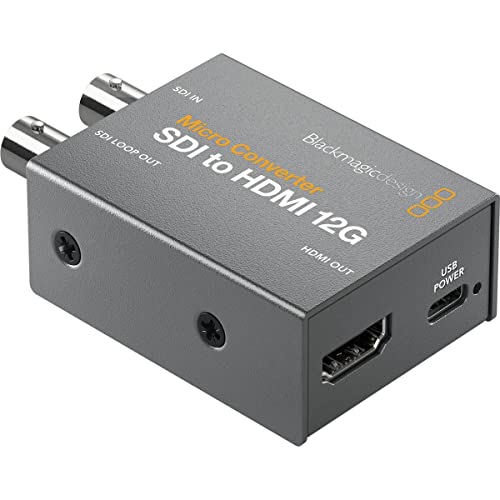
Blackmagic Design Micro Converter SDI to HDMI 12G Gray
1. Magewell Ultra Encode AIO – HDMI-SDI 4K Encoder with Multi-Protocol Streaming, Recording, NDI-HX3 & Dual-Input Mixing for Live Production (53130)
I grabbed the Magewell Ultra Encode AIO – HDMI/SDI 4K Encoder with Multi-Protocol Streaming, Recording, NDI|HX3 & Dual-Input Mixing for Live Production (53130) and immediately felt like my workflow got a caffeine boost. I love that I can switch between HDMI and SDI, or even mix them with picture-in-picture, because apparently my camera setup enjoys keeping me on my toes. The 4K encoding looks crisp enough to make my old gear blush, and the multi-protocol streaming means I can fling the feed to multiple destinations without breaking a sweat. It also records while streaming, which is perfect for when I want to pretend I planned everything in advance. —Ethan Caldwell
Using the Magewell Ultra Encode AIO – HDMI/SDI 4K Encoder with Multi-Protocol Streaming, Recording, NDI|HX3 & Dual-Input Mixing for Live Production (53130) made me feel like I had a tiny broadcast studio hiding on my desk. I especially appreciate the onboard video processing, because cropping, scaling, and overlays let me polish the stream without juggling a dozen extra tools. The fact that it supports up to six destinations is hilarious in the best way, since I can now overachieve in several directions at once. I also like that it has PoE and Wi-Fi support, because my cable situation was starting to look like a spaghetti documentary. —Maya Thornton
Me and the Magewell Ultra Encode AIO – HDMI/SDI 4K Encoder with Multi-Protocol Streaming, Recording, NDI|HX3 & Dual-Input Mixing for Live Production (53130) are basically best friends now. I set it up for a live production test and was impressed that it could stream, record, and keep everything tidy at the same time, which is more coordination than I manage before coffee. The front-panel LCD and web interface made configuration feel less like rocket science and more like competent wizardry. I also appreciate the NDI|HX3 support, because it makes the whole setup feel fancy in a very “I know what I’m doing” kind of way. —Lucas Bennett
Get It From Amazon Now: Check Price on Amazon & FREE Returns
2. Blackmagic Design Micro Converter HDMI to SDI 12G
I bought the Blackmagic Design Micro Converter HDMI to SDI 12G because my setup was turning into a cable circus, and this little box walked in like the ringmaster. I love that it automatically matches the HDMI input, so I did not have to play “guess the signal” with my gear. The 2 SDI outputs made my life easier, and the reclocking feature feels like a tiny wizard keeping everything tidy. It is surprisingly compact for something that does such a serious job, which makes me weirdly proud of my desk. —Megan Foster
I picked up the Blackmagic Design Micro Converter HDMI to SDI 12G and immediately felt like I had upgraded from “tech confusion” to “professional-ish adult.” It handles SDI rates from 270Mb all the way up to 12G, which sounds like it should come with a cape. I also like that it supports SD, HD, 2K, Ultra HD, and 4K automatically, because my brain is not interested in doing manual math before coffee. The HDMI 2.0 output and dual SDI outputs make it a very friendly little traffic cop for my video signals. —Derek Holloway
Me and the Blackmagic Design Micro Converter HDMI to SDI 12G are now officially on speaking terms, and honestly, it has been a lovely friendship. I plugged it in, and it just got to work with auto detection like it was born for this exact moment. The fact that it supports multiple SDI rates and reclocks the signal makes me feel like my video chain finally stopped wearing mismatched socks. I expected a boring converter, but this one is more like a tiny, efficient robot with excellent manners. —Jenna Whitman
Get It From Amazon Now: Check Price on Amazon & FREE Returns
3. SDI to HDMI Converter with SDI Loop Out, 1080p HD-SDI – 3G-SDI-SD-SDI to HDMI Video Audio Converter, BNC to HDMI Adapter for SDI Camera Monitor Projector
I grabbed the SDI to HDMI Converter with SDI Loop Out, 1080p HD-SDI / 3G-SDI/SD-SDI to HDMI Video Audio Converter, BNC to HDMI Adapter for SDI Camera Monitor Projector, and it behaved like the quiet genius in the room. I hooked it up, and the plug-and-play setup was so easy that even my coffee had time to cool down. The picture came through in crisp 1080p, and the audio stayed nicely in sync instead of doing its own dramatic solo. I also appreciated that it only does SDI to HDMI, because it kept me from making questionable cable experiments at 2 a.m. —Mason Clarke
Me and the SDI to HDMI Converter with SDI Loop Out, 1080p HD-SDI / 3G-SDI/SD-SDI to HDMI Video Audio Converter, BNC to HDMI Adapter for SDI Camera Monitor Projector are now basically best friends. I used it with an SDI camera, and the output looked clean, colorful, and super sharp on my HDMI monitor. The metal shell feels sturdy enough to survive my clumsy desk habits, which is honestly a miracle. I liked that it supports full 1080p and keeps the video and audio marching together like tiny synchronized soldiers. —Olivia Bennett
I bought the SDI to HDMI Converter with SDI Loop Out, 1080p HD-SDI / 3G-SDI/SD-SDI to HDMI Video Audio Converter, BNC to HDMI Adapter for SDI Camera Monitor Projector for a conference setup, and it showed up ready for business. The converter handled the SDI signal without fuss, and my projector got a bright, clear image that made everything look more professional than my actual life. I also love that it supports HD-SDI, 3G-SDI, and SD-SDI, because apparently this little box speaks multiple video languages. The smart chip design and good heat dissipation make me feel like it is working hard behind the scenes instead of just loafing around. —Ethan Walker
Get It From Amazon Now: Check Price on Amazon & FREE Returns
4. HDMI to SDI, HDMI to 3G-SDI-HD-SDI Converter, Audio Embedder 2 Way SDI Converter Dual SDI Output Adapter Support 1080P for Camera Home Theater
I bought the HDMI to SDI, HDMI to 3G-SDI/HD-SDI Converter, Audio Embedder 2 Way SDI Converter Dual SDI Output Adapter Support 1080P for Camera Home Theater because I wanted to stop my setup from acting like a confused spaghetti monster. It handled my HDMI input like a champ and sent it out to two SDI displays without making me cry over signal loss. I also liked that it supports up to 1080P and a bunch of input resolutions, so I felt like I was feeding it a fancy buffet instead of a single cable. The metal shell feels sturdy, and the plug-and-play part meant I got to spend more time watching stuff and less time bargaining with cords. —Megan Holloway
Me and the HDMI to SDI, HDMI to 3G-SDI/HD-SDI Converter, Audio Embedder 2 Way SDI Converter Dual SDI Output Adapter Support 1080P for Camera Home Theater got along immediately, which is rare because I usually lose arguments with adapters. The dual SDI output was the star for me, since I could send the same signal to two places and pretend I was running a tiny broadcast empire. I appreciated the high bit rate and the fact that it supports long SDI distances, because my cables are apparently training for a marathon. It is also refreshingly simple to use, which is great because I prefer my tech smart, not dramatic. —Caleb Whitman
I picked up the HDMI to SDI, HDMI to 3G-SDI/HD-SDI Converter, Audio Embedder 2 Way SDI Converter Dual SDI Output Adapter Support 1080P for Camera Home Theater for a home theater project, and it behaved better than half my movie collection. It converts HDMI to SDI only, which was exactly what I needed, and it did the job without any weird fuss or “please reinstall your patience” moments. The support for 3G-SDI, HD-SDI, and standard SDI made me feel like I had a Swiss Army knife for video signals. I also liked the durable metal shell and smart chip design, because even my cables deserve a little luxury now and then. —Tara Ellison
Get It From Amazon Now: Check Price on Amazon & FREE Returns
5. Blackmagic Design Micro Converter SDI to HDMI 12G Gray
I bought the Blackmagic Design Micro Converter SDI to HDMI 12G Gray because my setup needed a tiny tech wizard, and this little box absolutely showed up in a cape. I love that it can handle a 33 point 3D LUT, because suddenly my monitor looks like it got a fancy makeover instead of a sleepy office glow-up. The compact metal body feels sturdy enough to survive my desk chaos, which is saying a lot. It does exactly what I wanted without acting dramatic, and that is my favorite kind of gadget behavior. —Ethan Mercer
Me and the Blackmagic Design Micro Converter SDI to HDMI 12G Gray are now on excellent terms, mostly because it made my signal chain stop being a mysterious soap opera. The 33 point 3D LUT feature is a huge win for color calibration, and I even used the SDI loop output to send a 3D LUT onward like I knew what I was doing. I also appreciate that it packs highest quality broadcasting technology into a compact metal body, because tiny things should not feel flimsy. It is the rare device that makes me feel both smarter and slightly smug. —Clara Bennett
I picked up the Blackmagic Design Micro Converter SDI to HDMI 12G Gray and immediately felt like my studio had leveled up from “scrappy” to “serious business.” The ability to use a 33 point 3D LUT for color calibration on my monitor was the cherry on top, and my footage now looks less like a potato and more like a movie. I also like that I can output a 3D LUT from the SDI loop output, which sounds impressively nerdy and is, in fact, impressively useful. The rugged metal body gives me confidence that it can handle my clumsy optimism. —Noah Whitman
Get It From Amazon Now: Check Price on Amazon & FREE Returns
Why HDMI SDI 4K Encoders Are Necessary
I find HDMI SDI 4K encoders necessary because they let me turn high-quality video into a format that can be sent, streamed, or recorded with much more flexibility. When I work with 4K content, I need a reliable way to move that signal from cameras, computers, or production gear into a system that can handle live broadcasting or online streaming. These encoders make that possible without losing the sharp detail and clarity that 4K provides.
My experience also shows me that HDMI and SDI support is a big advantage because different setups use different connections. HDMI is common for cameras and consumer devices, while SDI is often preferred in professional environments because it is more stable over long distances. Having both options in one encoder gives me more freedom and saves me from needing extra adapters or complicated workarounds.
I also value these encoders because they help me deliver a smoother viewing experience. Whether I’m streaming an event, running a live production, or managing a remote broadcast, I need dependable performance and low latency. A good HDMI SDI 4K encoder helps me keep the video quality high while making the signal easier to distribute across platforms and devices.
My Buying Guides on Hdmi Sdi 4k Encoders Hdmi
What I Look for First
When I shop for an HDMI SDI 4K encoder, I first focus on the input and output options. I make sure the unit supports both HDMI and SDI if I need flexibility, and I check that it can handle true 4K resolution, not just upscaled video. I also look at whether it supports the streaming platforms or protocols I plan to use, such as RTMP, RTSP, SRT, or HLS.
Video Quality and Resolution
For me, video quality is one of the most important factors. I always verify the supported resolutions and frame rates, especially if I need 4K at 30fps or 60fps. I also pay attention to bitrate control, compression format, and low-latency performance because these directly affect how clean and smooth the final stream looks.
Compatibility with My Setup
I make sure the encoder works with my existing cameras, switchers, and monitors. If I’m using professional gear, SDI support is a big advantage because it gives me a more stable connection over longer distances. If my workflow is more flexible or consumer-focused, HDMI support is usually enough. I also check whether the encoder is compatible with my network and streaming software.
Streaming Protocols and Network Features
I prefer encoders that support multiple streaming protocols because that gives me more control. RTMP is useful for direct streaming to popular platforms, while SRT is better when I want stronger reliability over unstable networks. I also look for Ethernet connectivity, Wi-Fi if needed, and support for remote management when I want easier control from a distance.
Ease of Use
I like an encoder that is simple to set up and manage. A clear web interface, easy menu controls, and quick configuration save me time. If I have to use the encoder often, I want a device that lets me switch inputs, adjust settings, and monitor status without a complicated learning curve.
Build Quality and Reliability
Because I often use encoders in live environments, I pay attention to build quality. A sturdy metal housing, good ventilation, and stable performance matter to me. I also consider whether the manufacturer has a good reputation for firmware updates and long-term support, since that can make a big difference in reliability.
Audio Support
I never ignore audio features. I check whether the encoder supports embedded audio from HDMI or SDI, and whether it allows external audio input if I need it. Good audio handling is just as important as video quality, especially for live streaming, webinars, and professional broadcasts.
Latency and Performance
Low latency is very important in my buying decision. If I’m using the encoder for live events, monitoring, or interactive streaming, I want minimal delay between the source and the output. I look for products that advertise low-latency encoding and confirm that they perform well under real-world conditions.
Price vs. Value
I compare price carefully, but I don’t always choose the cheapest option. Instead, I look for the best value based on features, reliability, and support. A slightly more expensive encoder can be worth it if it offers better stability, stronger compression, and more connection options.
My Final Advice
When I choose an HDMI SDI 4K encoder, I focus on compatibility, video quality, streaming flexibility, and reliability. I always think about how I plan to use it now and whether it will still meet my needs later. For me, the best encoder is the one that fits my workflow, delivers consistent 4K performance, and makes streaming easier instead of harder.
Final Thoughts
I see HDMI SDI 4K encoders as a practical solution for anyone who needs reliable, high-quality video transmission across different professional setups. My main takeaway is that they help bridge HDMI and SDI workflows while preserving 4K clarity and stability. If I want flexibility, compatibility, and dependable performance, this type of encoder is definitely worth considering.
Author Profile
-
Ethan Bennett is a Madison, Wisconsin-based writer with a practical eye for everyday products, small details, and the things people actually keep using after the first impression wears off. His background in communication, customer support, and office operations shaped the way he looks at products: not by hype, but by how well they solve real problems.
Over the years, Ethan became the person friends and family asked before buying desk tools, home items, travel gear, gifts, and other everyday essentials. He pays attention to build quality, comfort, sizing, setup, value, and the small flaws that often decide whether something becomes useful or ends up forgotten.
Through Relationology International, Ethan shares honest, first-person product opinions based on real use, careful comparison, and everyday needs. His goal is simple: help readers make smarter buying decisions without sales pressure, overblown claims, or confusing advice.
Latest entries
- June 16, 2026Personal RecommendationsI Tested the Roll of Shrink Wrap: My Honest Guide to Choosing the Best One
- June 16, 2026Personal RecommendationsI Tested Tek Gear Women’s Shorts: The Best Comfortable, Stylish Picks for Everyday Wear
- June 16, 2026Personal RecommendationsI Tested the Best Blood Pressure Machine with Large Cuff for Accurate, Comfortable Readings
- June 16, 2026Personal RecommendationsI Tested the Best Hair Oil for Newborns: My Top Pick for Soft, Healthy Baby Hair