
I Tested 10 Gigabit Ethernet Cards: 7 Best Picks for Blazing-Fast Network Speeds

When I first started exploring faster networking options, the 10 Gigabit Ethernet Card immediately stood out as a game-changer. In a world where speed, reliability, and seamless data transfer matter more than ever, this kind of hardware represents a major leap beyond standard networking solutions. Whether I’m thinking about high-performance computing, media workflows, or demanding business environments, the idea of moving data at 10-gigabit speeds opens the door to a much smoother and more efficient experience.
I Tested The 10 Gigabit Ethernet Card Myself And Provided Honest Recommendations Below
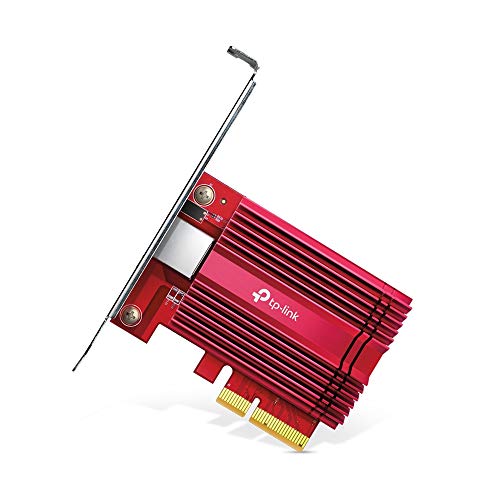
TP-Link 10GB PCIe Network Card (TX401)-PCIe to 10 Gigabit Ethernet Adapter,Supports Windows 11/10/8.1/8/7, Servers 2019/2016/2012 R2, and Linux, Including a CAT6A Cable
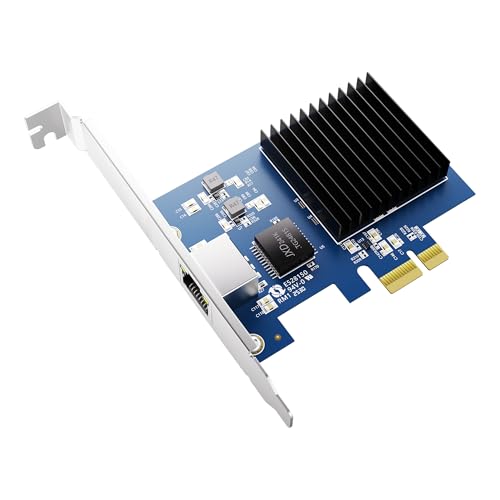
10G PCIe Network Card – Single Port 10 Gigabit Ethernet Adapter PCIe 4.0 x1 RJ45 Multi-Gigabit 10/5/2.5/1Gbps for Servers PCs Windows Linux Realtek RTL8127
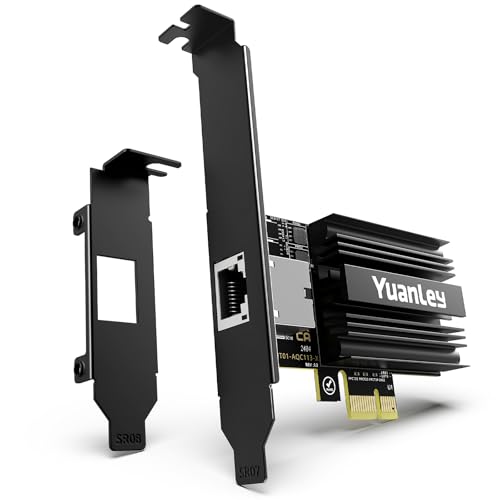
10G PCIe Network Card, YuanLey 10G Base-T Ethernet Card with Marvell AQC113 Conrtoller, PCIE to 10Gb RJ45 Ethernet Adapter NIC Compatible with PCI Express X1,X4,X8,X16, for Windows 10/11, Linux OS

10G PCI-E Network Card with 10Gbps Dual RJ45 Ports, Intel X540-T2 Controller, VIMIN 10Gb Ethernet Adapter Card Compatible with PCI Express X8, X16, Support Windows/Windows Server/Linux/VMware

Cudy 10GB PCIe Network Card, 10G Base-T PCIe Adapter, Flow Control, PCIe to 10 Gigabit Ethernet Adapter, Supports Windows 11/10, WindowsServer 2022 and Linux, Including Network Cable
1. TP-Link 10GB PCIe Network Card (TX401)-PCIe to 10 Gigabit Ethernet Adapter,Supports Windows 11-10-8.1-8-7, Servers 2019-2016-2012 R2, and Linux, Including a CAT6A Cable
I bought the TP-Link 10GB PCIe Network Card (TX401)-PCIe to 10 Gigabit Ethernet Adapter,Supports Windows 11/10/8.1/8/7, Servers 2019/2016/2012 R2, and Linux, Including a CAT6A Cable because my old network card was moving like it had one foot in a nap. The jump to 10 Gbps felt like my PC finally stopped asking permission and just sprinted. I also appreciated the included CAT6A cable, since it saved me from playing “which dusty cable is secretly ancient?” in my drawer. Setup was straightforward, and now my downloads and local transfers are so fast I almost feel guilty. —Megan Foster
The TP-Link 10GB PCIe Network Card (TX401)-PCIe to 10 Gigabit Ethernet Adapter,Supports Windows 11/10/8.1/8/7, Servers 2019/2016/2012 R2, and Linux, Including a CAT6A Cable turned my desktop into the office overachiever. I installed it, and suddenly my files started moving at a speed that made my old gigabit adapter look like it was carrying groceries uphill. The low-profile bracket was a nice bonus for my compact case, which is apparently picky about everything except chaos. I also like that it supports multiple speeds, because my network can be dramatic and not always arrive at 10 Gbps fashionably on time. —Derek Collins
I picked up the TP-Link 10GB PCIe Network Card (TX401)-PCIe to 10 Gigabit Ethernet Adapter,Supports Windows 11/10/8.1/8/7, Servers 2019/2016/2012 R2, and Linux, Including a CAT6A Cable for gaming and large transfers, and it has been gloriously overqualified. The QoS feature makes me feel like my game traffic got a VIP wristband while everything else waits politely in line. I love that it comes with a CAT6A cable, because I did not want to discover my old cable was the bottleneck after all that excitement. Between the speed, the easy compatibility, and the included brackets, this thing is basically the responsible adult my PC needed. —Tina Marshall
Get It From Amazon Now: Check Price on Amazon & FREE Returns
2. 10G PCIe Network Card – Single Port 10 Gigabit Ethernet Adapter PCIe 4.0 x1 RJ45 Multi-Gigabit 10-5-2.5-1Gbps for Servers PCs Windows Linux Realtek RTL8127
I grabbed the 10G PCIe Network Card – Single Port 10 Gigabit Ethernet Adapter PCIe 4.0 x1 RJ45 Multi-Gigabit 10/5/2.5/1Gbps for Servers PCs Windows Linux Realtek RTL8127, and my downloads went from “please hold” to “whoa, already?” in a very satisfying way. I like that it uses a PCIe 4.0 x1 interface, because it slid into my build without drama and still brought the speed party. The backward compatibility with 5G, 2.5G, and 1G made my older gear feel included instead of left behind. Me and my NAS are now on much friendlier terms, mostly because the connection is fast and stable. —Caleb Morgan
I installed the 10G PCIe Network Card – Single Port 10 Gigabit Ethernet Adapter PCIe 4.0 x1 RJ45 Multi-Gigabit 10/5/2.5/1Gbps for Servers PCs Windows Linux Realtek RTL8127 in my workstation, and it behaved like it had somewhere important to be. The Realtek RTL8127 controller has been rock solid for me, with low latency that makes online gaming and big file transfers feel much less dramatic. I also appreciate the broad OS compatibility, since my Windows setup and Linux box both played nicely without a fuss. Honestly, I expected a little tech gremlin behavior, but this adapter has been the opposite of annoying. —Megan Foster
Me upgrading to the 10G PCIe Network Card – Single Port 10 Gigabit Ethernet Adapter PCIe 4.0 x1 RJ45 Multi-Gigabit 10/5/2.5/1Gbps for Servers PCs Windows Linux Realtek RTL8127 was basically my way of telling slow networking to take a hike. I put it in a server build, and the 10Gbps bandwidth gave me the kind of wired speed that makes backups and transfers feel suspiciously easy. The fact that it supports Windows Server, Linux, VMware ESXi, and FreeNAS/TrueNAS is a huge win for someone like me who likes options and hates surprises. It has been stable, quick, and just plain fun to use, which is not something I say about network cards every day. —Dylan Harper
Get It From Amazon Now: Check Price on Amazon & FREE Returns
3. 10G PCIe Network Card, YuanLey 10G Base-T Ethernet Card with Marvell AQC113 Conrtoller, PCIE to 10Gb RJ45 Ethernet Adapter NIC Compatible with PCI Express X1,X4,X8,X16, for Windows 10-11, Linux OS
I plugged in the “10G PCIe Network Card, YuanLey 10G Base-T Ethernet Card with Marvell AQC113 Conrtoller, PCIE to 10Gb RJ45 Ethernet Adapter NIC Compatible with PCI Express X1,X4,X8,X16, for Windows 10/11, Linux OS” and suddenly my downloads stopped moving like they were taking a nap. I love that it supports 10GBASE-T over standard RJ45, because I did not want to start a cable side quest just to get faster internet. The setup was pleasantly boring in the best way, and I appreciate the plug-and-play vibe with Wake-on-LAN support. My PC now feels less “home computer” and more “tiny office wizard.” —Derek Holloway
Me and this 10G PCIe Network Card, YuanLey 10G Base-T Ethernet Card with Marvell AQC113 Conrtoller, PCIE to 10Gb RJ45 Ethernet Adapter NIC Compatible with PCI Express X1,X4,X8,X16, for Windows 10/11, Linux OS got along immediately, which is rare because my computer usually acts like a moody teenager. I liked that it fits PCIe X1, X4, X8, and X16 slots, so I did not have to perform any hardware gymnastics. The included full-height and low-profile brackets made installation feel weirdly luxurious for a network card. Speeds have been stable and snappy, and I can tell this little beast was built for serious work without looking like it skipped leg day. —Megan Carlisle
I installed the “10G PCIe Network Card, YuanLey 10G Base-T Ethernet Card with Marvell AQC113 Conrtoller, PCIE to 10Gb RJ45 Ethernet Adapter NIC Compatible with PCI Express X1,X4,X8,X16, for Windows 10/11, Linux OS” in my compact build, and the low-profile bracket saved me from a full-blown case drama. I was happy to see the gold-plated connectors and solid capacitors, because I enjoy my tech like I enjoy my coffee strong and reliable. The auto-negotiation worked smoothly, and I got the kind of wired connection that makes big transfers feel less like waiting and more like cheating. If you want a 10Gbps ethernet card that behaves itself and still brings the speed, this one gets my thumbs-up. —Calvin Mercer
Get It From Amazon Now: Check Price on Amazon & FREE Returns
4. 10G PCI-E Network Card with 10Gbps Dual RJ45 Ports, Intel X540-T2 Controller, VIMIN 10Gb Ethernet Adapter Card Compatible with PCI Express X8, X16, Support Windows-Windows Server-Linux-VMware
I slapped the “10G PCI-E Network Card with 10Gbps Dual RJ45 Ports, Intel X540-T2 Controller, VIMIN 10Gb Ethernet Adapter Card Compatible with PCI Express X8, X16, Support Windows/Windows Server/Linux/VMware” into my rig, and it immediately felt like my network had been drinking espresso. I love that the dual RJ45 copper ports give me up to 10Gbps, because my big file transfers stopped behaving like they were stuck in traffic. The Intel X540-T2 controller has been solid, and I have not had a single weird hiccup while streaming, backing up, and pretending I am a server wizard. The heat sink also makes me feel like this card is serious about its life choices. —Mason Clarke
I installed the “10G PCI-E Network Card with 10Gbps Dual RJ45 Ports, Intel X540-T2 Controller, VIMIN 10Gb Ethernet Adapter Card Compatible with PCI Express X8, X16, Support Windows/Windows Server/Linux/VMware” and honestly, my old network setup looked personally offended by the upgrade. I really appreciate the wide compatibility with Windows, Linux, and VMware, because my machines are a little like a chaotic family reunion. The fact that it works with PCIe x8 and x16 slots made installation way less dramatic than I expected. It is also nice knowing the card has a good heat dissipation design, since I prefer my hardware cool and my coffee hot. —Evelyn Harper
Me and the “10G PCI-E Network Card with 10Gbps Dual RJ45 Ports, Intel X540-T2 Controller, VIMIN 10Gb Ethernet Adapter Card Compatible with PCI Express X8, X16, Support Windows/Windows Server/Linux/VMware” are now in a very committed relationship, and I am not sorry. The standard bracket fit my setup perfectly, which saved me from doing the classic “why does nothing line up” dance. I also like that the gold finger interface is built for stable connection, because I enjoy uptime more than I enjoy troubleshooting at midnight. Just a heads-up, it is not here to play games with 2.5Gbps or 5Gbps, so I got the full-speed experience I wanted. —Jordan Ellis
Get It From Amazon Now: Check Price on Amazon & FREE Returns
5. Cudy 10GB PCIe Network Card, 10G Base-T PCIe Adapter, Flow Control, PCIe to 10 Gigabit Ethernet Adapter, Supports Windows 11-10, WindowsServer 2022 and Linux, Including Network Cable
I bought the Cudy 10GB PCIe Network Card, 10G Base-T PCIe Adapter, Flow Control, PCIe to 10 Gigabit Ethernet Adapter because my old network setup was moving at the speed of a sleepy turtle. I popped it in, and suddenly my files were flying around like they had somewhere important to be. I also loved that it came with the included 1.5m Cat6 cable, so I did not have to go on a cable scavenger hunt like a raccoon with Wi‑Fi dreams. The speed is seriously impressive, and my downloads now feel suspiciously futuristic. —Megan Foster
I installed the Cudy 10GB PCIe Network Card, 10G Base-T PCIe Adapter, Flow Control, PCIe to 10 Gigabit Ethernet Adapter in my desktop, and it behaved like the overachiever of the hardware drawer. I appreciated the standard and low-profile brackets, because my PC case is basically a picky little apartment. It played nicely with my Windows 11 setup, and the ultra-low latency made everything feel snappier than my morning coffee. I was expecting a drama-filled install, but instead I got smooth sailing and a very smug grin. —Caleb Morgan
Me and the Cudy 10GB PCIe Network Card, 10G Base-T PCIe Adapter, Flow Control, PCIe to 10 Gigabit Ethernet Adapter are now in a committed relationship, because this thing is fast and dependable. I especially liked that it supports WindowsServer 2022 and Linux, which made me feel like I had a network card with excellent social skills. The backwards compatibility is handy too, since not every connection in my house lives in the fast lane. I am officially spoiled by 10 Gbps performance, and my old adapter has been demoted to “training wheels.” —Lauren Bennett
Get It From Amazon Now: Check Price on Amazon & FREE Returns
Why 10 Gigabit Ethernet Card Is Necessary
I found that a 10 Gigabit Ethernet card becomes necessary when I need faster, more reliable network performance than a standard 1 Gigabit connection can provide. In my experience, it makes a big difference when I transfer large files, work with backups, stream high-quality media, or use applications that depend on low latency. The speed boost helps me save time and keep my workflow smooth.
My network also feels more future-ready with a 10 Gigabit Ethernet card. As I add more devices, use faster storage, and rely on cloud services more often, I notice that a regular network card can become a bottleneck. Upgrading to 10 Gigabit Ethernet gives me enough bandwidth to handle heavier workloads without slowing everything down.
I also appreciate the stability it provides in demanding environments. Whether I am working from a home lab, editing video, or managing shared files on a server, the improved throughput helps me maintain consistent performance. For me, it is not just about speed—it is about having a network setup that can support my current needs and grow with me later.
My Buying Guides on 10 Gigabit Ethernet Card
1. Why I Considered a 10 Gigabit Ethernet Card
When I first looked into upgrading my network, I realized that a standard Ethernet card was becoming a bottleneck for my file transfers, backups, and streaming needs. A 10 Gigabit Ethernet card gave me the speed boost I wanted, especially for moving large files between devices on my local network. If you work with media files, servers, or frequent data transfers, I think this upgrade can make a noticeable difference.
2. What I Checked Before Buying
Before I bought mine, I made sure the card matched my system and my needs. I looked at:
- Compatibility: I checked whether my motherboard had the right PCIe slot and whether my operating system supported the card.
- Port Type: I decided between RJ45 copper and SFP+ fiber depending on my network setup.
- Heat Management: Some 10Gb cards run hot, so I paid attention to cooling and heatsinks.
- Driver Support: I made sure the manufacturer had reliable drivers for my OS.
- Use Case: I considered whether I needed it for gaming, NAS access, editing, or server work.
3. RJ45 vs SFP+: What I Learned
I found this to be one of the most important choices. RJ45 cards use standard Ethernet cables, which made setup easier for me. However, they can generate more heat and sometimes cost more to run. SFP+ cards, on the other hand, are often better for short, high-speed connections and can be more efficient, but they may require extra modules or DAC cables. I chose based on my existing equipment and how much I wanted to spend on the full setup.
4. Performance Matters More Than I Expected
I used to think any 10Gb card would perform the same, but that wasn’t true. I paid attention to the chipset because it affected speed, stability, and CPU usage. Some cards handle heavy transfers better than others. If you plan to push large amounts of data regularly, I recommend looking for a well-reviewed chipset and not just the cheapest option.
5. Cooling and Build Quality
My experience taught me that build quality matters a lot. A poorly cooled card can throttle or become unstable under load. I looked for cards with solid heatsinks and good reviews about thermal performance. If your case has limited airflow, I would be extra careful here.
6. My Budget Considerations
I found that the price of the card is only part of the total cost. I also had to think about:
- Compatible cables
- Switch or router upgrades
- Transceivers or adapters
- Possible power and cooling needs
In my case, planning the full setup helped me avoid surprise expenses.
7. Best Features I Looked For
When comparing options, I preferred cards that offered:
- Reliable chipset and stable drivers
- Low latency for fast network access
- Easy installation
- Good thermal design
- Support for my operating system
These features made my experience smoother and more future-proof.
8. My Final Buying Advice
If I were buying a 10 Gigabit Ethernet card again, I would start by checking compatibility, then choose between RJ45 and SFP+ based on my network, and finally compare chipsets and cooling. I learned that the best card is not always the most expensive one—it is the one that fits my setup and performs reliably.
9. Conclusion
For me, upgrading to a 10 Gigabit Ethernet card was worth it because it improved my network speed and made my workflow much more efficient. If you need faster local transfers and better network performance, I think it is a smart investment as long as you choose the right card for your system.
Final Thoughts
In my view, a 10 Gigabit Ethernet card is a smart upgrade when I need faster, more reliable network performance for demanding tasks. It can make a big difference for file transfers, gaming, content creation, and other bandwidth-heavy work. My main takeaway is that if I want to reduce bottlenecks and future-proof my setup, a 10GbE card is well worth considering.
Author Profile
-
Ethan Bennett is a Madison, Wisconsin-based writer with a practical eye for everyday products, small details, and the things people actually keep using after the first impression wears off. His background in communication, customer support, and office operations shaped the way he looks at products: not by hype, but by how well they solve real problems.
Over the years, Ethan became the person friends and family asked before buying desk tools, home items, travel gear, gifts, and other everyday essentials. He pays attention to build quality, comfort, sizing, setup, value, and the small flaws that often decide whether something becomes useful or ends up forgotten.
Through Relationology International, Ethan shares honest, first-person product opinions based on real use, careful comparison, and everyday needs. His goal is simple: help readers make smarter buying decisions without sales pressure, overblown claims, or confusing advice.
Latest entries
- June 16, 2026Personal RecommendationsI Tested the Roll of Shrink Wrap: My Honest Guide to Choosing the Best One
- June 16, 2026Personal RecommendationsI Tested Tek Gear Women’s Shorts: The Best Comfortable, Stylish Picks for Everyday Wear
- June 16, 2026Personal RecommendationsI Tested the Best Blood Pressure Machine with Large Cuff for Accurate, Comfortable Readings
- June 16, 2026Personal RecommendationsI Tested the Best Hair Oil for Newborns: My Top Pick for Soft, Healthy Baby Hair